How to Test New Skincare Products for Clogged Pores Over 4 Weeks
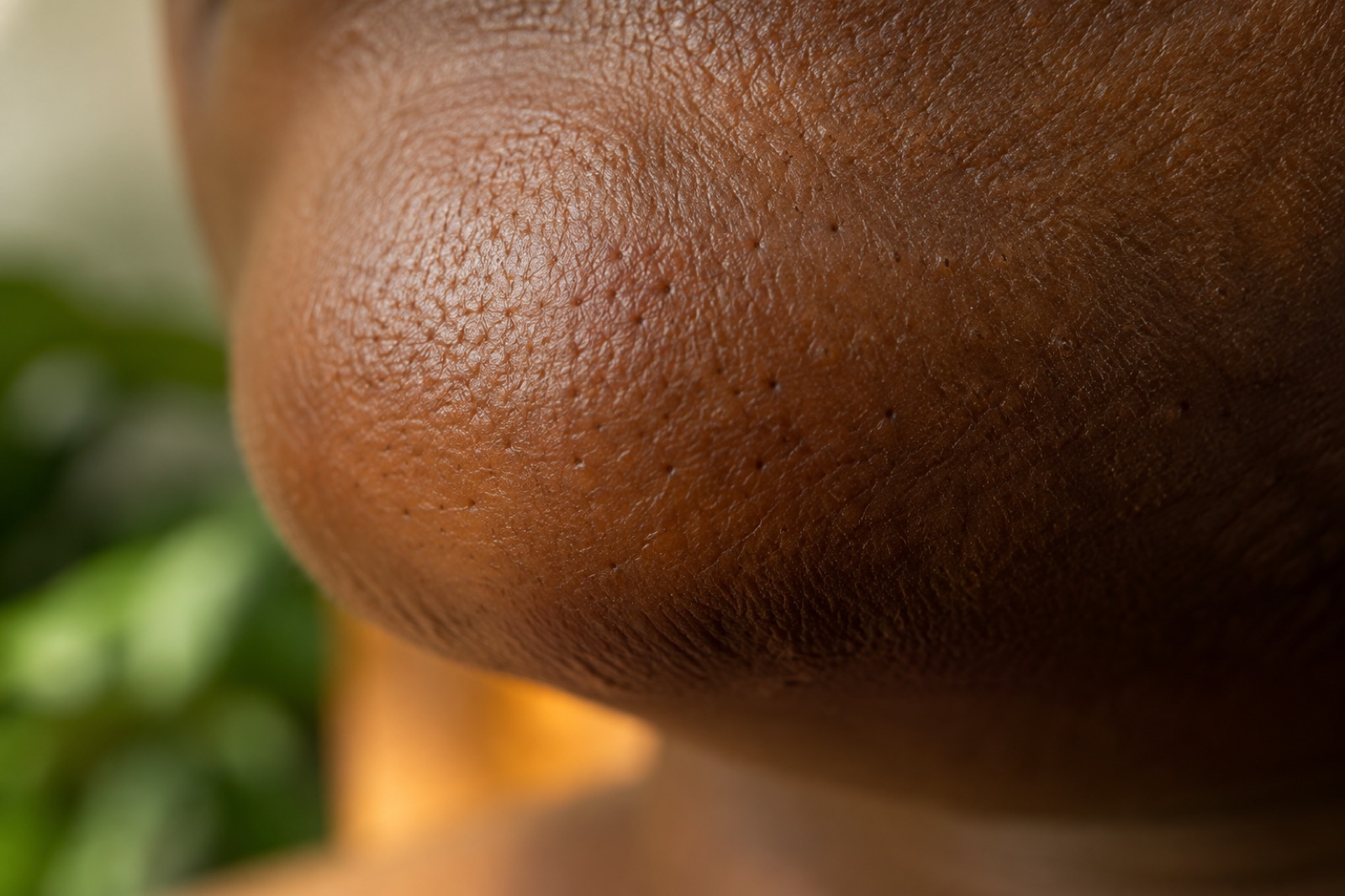
Try each new product on its own, first on one side of your jawline, and compare the number of tiny bumps with the other side for 4 weeks to see whether it clogs pores.
What this note covers7 sections
- Can the first 10 ingredients tell you if a product suits oily or dry skin?
- Is non-comedogenic cleansing oil safe to use on acne-prone skin?
- What sets a non-comedogenic moisturizer apart?
- Where do you count over 4 weeks, and when do you stop?
- 4-week clogged-pore log for a new product
- When should a doctor look at the bumps?
- What the cited studies found, in short
| Point | Detail | Source |
|---|---|---|
| How long to check | A patch study on finished cosmetics applied them 3 times a week for 4 weeks and counted microcomedones | 2006 PMID 16488305 · B |
| Where to count | In 66 women with acne, the number of closed comedones on the forehead moved together with the sides of the cheeks, chin, and upper back | 2016 PMID 26094640 · B |
| Ingredient vs finished product | Even with a comedogenic ingredient inside, the finished product did not always cause comedones (6 people) | 2006 PMID 16488305 · B |
| Limits of an ingredient list | The 1976 data that labeled esters such as isopropyl myristate as comedogenic came from rabbit tests | 1976 PMID 138532 · B |
| Agency guidance | Choose products labeled oil-free, noncomedogenic, or nonacnegenic, and remove makeup every night | KDCA (Korea) · institution |
Can the first 10 ingredients tell you if a product suits oily or dry skin?
The first ingredients let you guess how heavy a formula is, but not whether it will clog your pores. In a 2006 trial that patched finished products on 6 comedone-prone people for 4 weeks, products containing comedogenic ingredients did not always cause comedones.
There are also examples showing an ingredient name alone is no reason to panic. In a 1998 placebo-controlled crossover trial, people with mild acne applied linoleic acid, an oil-type ingredient, for 1 month, and microcomedones did not increase. On the other hand, a 1976 study used rabbit tests to label ingredients such as isopropyl myristate, butyl stearate, and some lanolins as comedogenic. Since those are animal-model results, we don’t apply them directly to human faces, but if you note whether ester names like these sit in the “top ingredients” column of your log, you will have candidates to compare if tiny bumps increase later.

Is non-comedogenic cleansing oil safe to use on acne-prone skin?
The evidence we reviewed has no study that tested cleansing oils on their own for comedones, so watching the spots where residue stays after rinsing is more practical than trusting the label. The Korea Disease Control and Prevention Agency (KDCA), Korea’s national public health agency, advises removing makeup every night with a gentle cleanser and water, and notes that double cleansing helps on days you wear sunscreen or makeup, because follicles can get blocked.
Even with a rinse-off product, the jawline, the hairline, and the creases beside the nostrils are spots rinse water tends to miss. If you often wash up in a hurry after a workout at the gym, count bumps in those three spots separately for the first 2 weeks after switching oils. If you start a new oil and a new sunscreen in the same week, you can’t separate the results, so leave a week between them.
What sets a non-comedogenic moisturizer apart?
The label means the maker checked that it is unlikely to cause comedones, not that every brand used the same test. The KDCA advises picking oil-free products, or ones labeled noncomedogenic or nonacnegenic, when you use a moisturizer or liquid foundation on acne-prone skin.
That doesn’t mean you should drop moisturizer altogether. In a 2013 case-control study comparing 910 adult acne patients with 910 controls, higher overall cosmetic use was actually linked to lower odds (odds ratio) of adult acne. The measure lumped all cosmetics together, so it says nothing about specific ingredients, but it fits a log better to ask “what did I add?” than to assume “more product means more clogging.”

Where do you count over 4 weeks, and when do you stop?
Pick one side of your jawline and your forehead as your reference spots, and count tiny bumps on the same weekday under the same lighting each week. In a 2016 study of 66 women with acne, closed comedones on the forehead were significantly linked to the counts on the sides of the cheeks, chin, and upper back, so steadily counting just the forehead can show you the trend.
Plenty of people feel their cosmetics are to blame. In a 2021 survey of 539 Korean acne patients, 38.1% of the group whose earlier care had not worked well said continued cosmetic use made their acne worse. That is self-report, not cause and effect, but writing counts instead of impressions gives you something you can show at a dermatology visit, too.
4-week clogged-pore log for a new product
| Week | Where you apply it | Where you count | What to write | Condition to move on |
|---|---|---|---|---|
| Day before starting | — | Forehead, both sides of the jawline | Bump count, 1 photo, first five ingredients | No other new products |
| Week 1 | One side of the jawline only | Both sides of the jawline | Difference in bump count, time of day skin gets shiny | Bumps don’t rise only on the applied side |
| Week 2 | One side of the jawline + half the forehead | Both sides of the jawline, left and right forehead | Bump count, mark period and short sleep | Difference between sides within 2 |
| Week 3 | Whole face | Forehead, jawline | New spots, days you wore makeup | No more than before starting |
| Week 4 | Whole face | Forehead, jawline | Compare with the photo from before starting | Decide whether to keep using it |
If bumps increase only on the side you applied it to, stop that week, go 2 weeks with only your usual products, and see whether the count comes back down. For products that stay on all day, such as sunscreen or cushion compacts, also write down what time you took your makeup off, starting in week 1.
When should a doctor look at the bumps?
- If tiny bumps keep increasing 2 weeks after you stop the product and go back to your usual ones, consider seeing a dermatologist.
- If several tender, red, swollen breakouts appear, don’t wait out the 4 weeks; get checked by a doctor.
- If an itchy, red rash spreads along the area you applied it to, stop using it and see a doctor.
- If you are using prescription acne medicine, ask the clinic that prescribed it before adding a new moisturizer or sunscreen.
What the cited studies found, in short
- In a 2006 trial (PMID 16488305) that patched finished cosmetics on 6 comedone-prone people 3 times a week for 4 weeks, finished products containing comedogenic ingredients did not always cause comedones.
- In a 2016 study of 66 women with acne (PMID 26094640), the number of closed comedones on the forehead was significantly linked to the sides of the cheeks, chin, and upper back.
- In a survey of 539 Korean acne patients (2021, PMID 33206430), 38.1% of the group whose earlier care had not worked well said cosmetic use made their acne worse.
Frequently asked questions
Can the first 10 ingredients tell you if a product is for oily or dry skin?
The first ingredients can hint at whether a formula feels heavy or light, but they can't tell you whether it will clog pores. A 2006 trial (6 people) found that finished products containing comedogenic ingredients did not always cause comedones in a 4-week patch test, so ingredient names alone are not enough for a verdict. Use the first 10 ingredients as notes in your log, and base your decision on the 4-week comparison.
Is non-comedogenic cleansing oil safe for acne-prone skin?
The evidence we reviewed has no study that looked directly at whether cleansing oils cause comedones. The Korea Disease Control and Prevention Agency (KDCA) advises removing makeup every night with a gentle cleanser and water, and double cleansing on days you wear sunscreen or makeup. If you use an oil, count bumps separately for at least 2 weeks along the jawline and hairline, where it tends to linger after rinsing.
What makes a non-comedogenic moisturizer different?
The label means the maker checked that it is unlikely to cause comedones. The KDCA advises choosing products labeled oil-free, noncomedogenic, or nonacnegenic when you use a moisturizer or liquid foundation on acne-prone skin. Still, products with the same label can be tested in different ways, so look at whether the testing conditions are disclosed and at your own 4-week log together.
Sources
- Korea Disease Control and Prevention Agency, National Health Information Portal — Acne (Korean)Institutional
- Korean Dermatological Association — Acne vulgaris (Korean)Institutional
- 4-week patch application of finished cosmetics and microcomedones, reassessing the comedogenic concept, 2006 (PMID 16488305)B
- Correlation of comedone sites on the face, upper chest, and back in 66 women with acne, 2016 (PMID 26094640)B
- Topical linoleic acid and microcomedone size, placebo-controlled crossover trial, 1998 (PMID 9692305)A
- Cosmetics made with noncomedogenic ingredients and the rate of acne cosmetica, 1976 (PMID 138532)B
- Cosmetic use and acne flare-ups, survey of 539 Korean acne patients, 2021 (PMID 33206430)B
- Amount of cosmetic use in 910 adult acne patients, case-control study, 2013 (PMID 23859829)B
Videos and forum posts never count as evidence for a fact here. Full rules: Editorial policy
What to check when choosing a product for this routine
Check the criteria below before the product name. Each item can be found on the full ingredient list or in the product description.
| Item | What to look for | Why |
|---|---|---|
| Comedogenicity testing note | Whether the brand says how comedogenicity was checked, including where on the skin it was applied | Unlike a label with only a claim, it lets you compare the conditions under which it was checked |
| Oils and esters near the top of the list | Whether oil or ester names are clustered in the first five spots of the ingredient list | If bumps go up in your 4-week log, it narrows down which ingredients to compare first |
| pH | Whether a weakly acidic range is written as a number | Since it goes on right after cleansing, it gives you a baseline when you read your notes on tightness and stinging |
| Fragrance | Whether fragrance appears in the ingredient list and, if so, in which position | It removes one variable when you log bumps and stinging separately |
Product from this site's operator · KW Cosmetic Content Team
Revive Therapy N.F TonerCosmetics do not replace the diagnosis or treatment of a skin condition.