Supplements for Acne: A 12-Week Log and When to Stop Taking Them
To judge a supplement for acne, log your start date for 12 weeks along with any skincare, medicine, or diet changes made during the same period; without that record, you cannot tell what made the difference.

What this note covers6 sections
| Keep in mind while logging | What studies saw | Basis |
|---|---|---|
| Time before judging | Supplement trials watched for 8 to 12 weeks before reporting results | 2022 · 2025 RCTs · A |
| Placebo changes too | In a probiotic trial (28 people), the placebo group’s inflammatory lesions also went down | 2021 RCT · A |
| If you change skincare at the same time | In a trial of 102 adult women, both groups also used a cleanser, moisturizer, and sunscreen | 2025 RCT · A |
| Same category, different results | In a 4-group trial of 114 people, only the combination group had a clearly larger drop in inflammatory lesions than placebo | 2022 RCT · A |
When can you tell whether an acne supplement is doing anything?
Most studies checked results at around 8 to 12 weeks, so it is better not to decide good or bad before then. In a 2025 12-week trial of 102 adult women, 44% of the combination supplement group reached “clear or almost clear” compared with 13% of the placebo group, but inflammatory lesion counts were not clearly different between the groups.
In the same trial, both groups also used a cleanser, moisturizer, and sunscreen. That is why your log should list not only the supplement but also any skincare you changed in the same week.

Why log other changes from the same weeks?
Because later you will not be able to tell whether a change came from the supplement or from the season, your skincare, or a medicine. In a 2021 probiotic trial of 28 acne patients in Korea, the group that took only a placebo also saw its inflammatory lesions go down.
Starting something you apply and something you swallow on the same day makes it even harder to sort out. A 2022 trial of 184 adult women compared a cream-only group with a group that added a supplement to the cream, and in both groups lesions dropped by more than half after 12 weeks. If you are a student heading into finals or working a stretch of late nights, leave a column for sleep too.

When should you stop, and who should you ask?
If you are newly prescribed a medicine, your stomach is upset, or your log shows no change after 12 weeks, stop and check. The Korea Disease Control and Prevention Agency (KDCA) says it is important to tell your doctor about the cosmetics and medicines you used before the visit.
So write down the supplements you take in the same column as your medicines and show it at your visit. If you menstruate, it also helps to note whether breakouts change with your cycle.
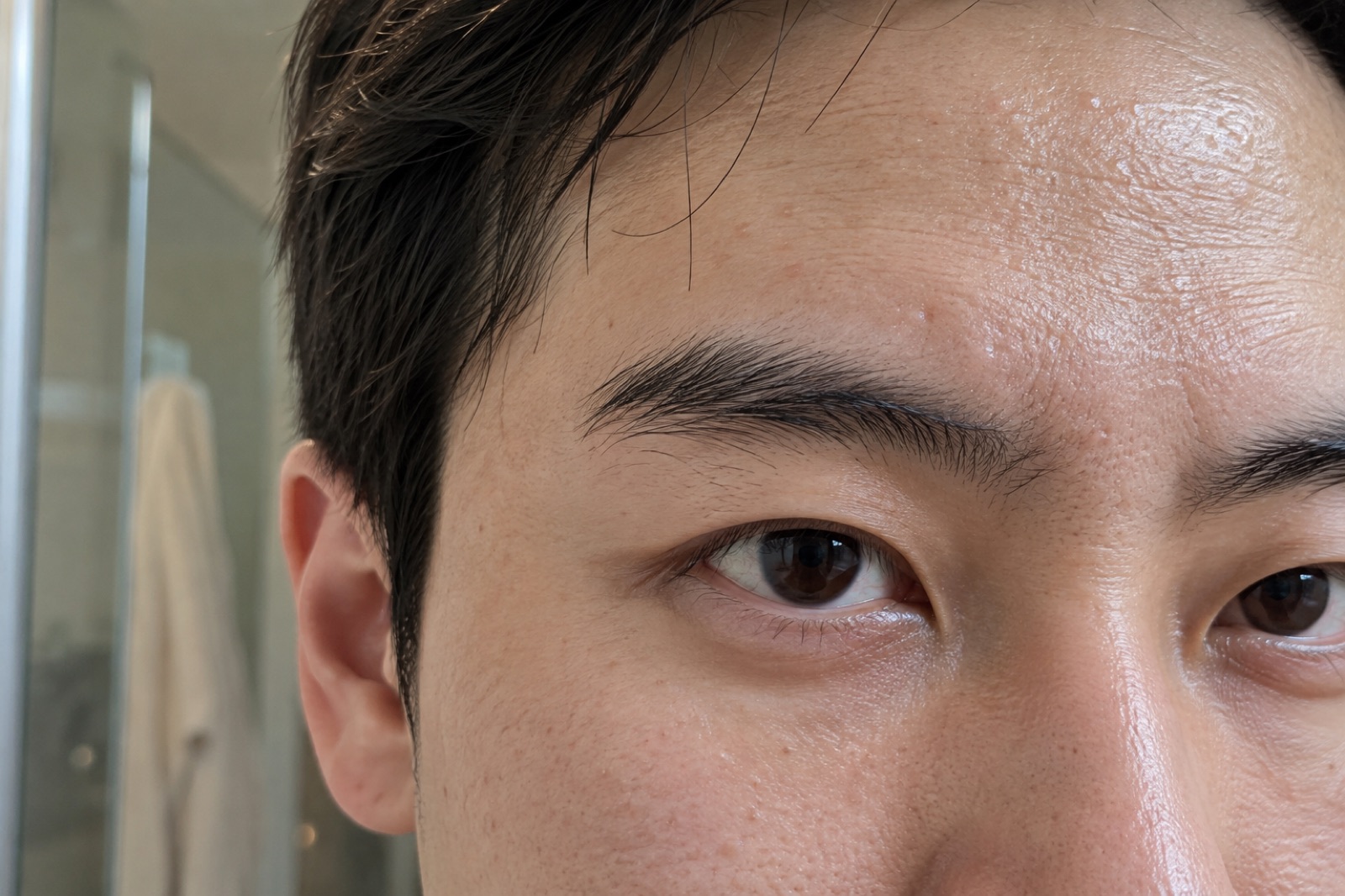
12-week acne supplement log
| Week | Supplement (name, number per day) | What else changed that week (skincare, medicine, diet, sleep, period) | New breakouts (count) | Stomach upset or rash | Photos | Call |
|---|---|---|---|---|---|---|
| Week 0 (before starting) | — | Front and both sides | Baseline | |||
| Week 1 | ||||||
| Week 2 | ||||||
| Week 4 | Front and both sides | |||||
| Week 8 | Front and both sides | Midpoint check | ||||
| Week 12 | Front and both sides | Continue / stop / see a doctor |
Stop rules: you start a new medicine · heartburn, diarrhea, or a rash · no difference from week 0 after 12 weeks.
When should you see a dermatologist instead of switching supplements?
- If deep, painful acne increases while you are taking a supplement, see a dermatologist rather than switching supplements again.
- If you take an acne medicine by mouth, talk with the prescribing clinic or a pharmacist before adding a supplement.
- If a rash or stomach symptoms keep going, stop taking it and get checked at a clinic.
Evidence behind this log
- In a 2025 12-week trial of 102 adult women with mild to moderate acne (PMID 40321085), 44% of the combination supplement group and 13% of the placebo group reached “clear or almost clear,” and the difference in inflammatory lesion counts between groups was not significant.
- In a 2021 12-week probiotic trial of 28 acne patients in Korea (PMID 33921829), lesion counts fell more in the supplement group than with placebo, but inflammatory lesions also went down in the placebo group.
- In a 2022 8-week trial that split 114 adults with acne into four groups (PMID 35061237), inflammatory lesions changed by -56.67% in the combination group and -18.89% in the placebo group.
Frequently asked questions
Does omega-3 help acne?
In a 2014 trial that split 45 people with mild to moderate acne into three groups, inflammatory and non-inflammatory lesions went down more in the group that took omega-3 for 10 weeks than in the group that took nothing. Still, it is a single study with few people per group, so it is hard to call the effect certain. If you take it, note your start date and any other changes over the same period.
Are there ingredients in supplements that can cause acne?
The findings are mixed. In a 2024 survey comparing 201 men in Jordan, 47% of the acne group and 27.7% of the control group were taking whey protein supplements, but in a 2024 trial that followed 49 men for 6 months, lesion changes with whey protein were no worse than in the group that did not take it. If breakouts increase after you start a new supplement, record it along with your start date.
Should you take supplements on an empty stomach or after a meal?
The sources behind this article include no study comparing whether timing changes acne results. Follow the directions on the package, and if you take any medicine, ask a pharmacist whether it is okay to take them together. If you get heartburn or diarrhea, write it in your log along with the time you took it.
Sources
- 12-week RCT of an oral supplement in adult women with mild to moderate acne, 102 people, 2025 (PMID 40321085)A
- RCT of 12 weeks of Lactobacillus CJLP55 intake for acne, 28 people, 2021 (PMID 33921829)A
- 8-week four-arm RCT of a probiotic and plant extract combination, 114 people, 2022 (PMID 35061237)A
- RCT of a cream alone vs. cream plus prebiotic supplement in adult women with acne, 184 people, 2022 (PMID 35545875)A
- RCT of omega-3 and gamma-linolenic acid intake for acne, 45 people, 2014 (PMID 24553997)A
- Case-control study of whey protein supplements and acne in men, 201 people, 2024 (PMID 38633058)B
- Non-inferiority RCT of whey protein intake and acne in men, 49 people, 2024 (PMID 38291989)A
- Korea Disease Control and Prevention Agency, National Health Information Portal — Acne (Korean)Institutional
Videos and forum posts never count as evidence for a fact here. Full rules: Editorial policy