Low pH Cleanser Switch: A 2-Week Log for Tightness and Redness
When you switch to a low pH foaming cleanser, log tightness and redness right after washing and afternoon shine at the same times for two weeks, then compare them with your scores from before the switch.

What this note covers8 sections
- If skin is slightly acidic, what changes when you switch foams?
- What pH range does a mildly acidic label actually mean?
- Does tightness in the first week mean low pH isn’t right for you?
- Why log afternoon shine too?
- Is white foam after toner a problem?
- Your 2-week switch log
- When is it time to see a dermatologist about a new cleanser?
- Summary of the evidence here
| Item | Detail | Basis |
|---|---|---|
| Why people switch | Korea’s KDCA advises a mildly acidic cleanser close to facial skin pH (5.0–5.5) and avoiding soap, which is usually alkaline | KDCA · Agency |
| Reading the label | 96 cleansing products on the market for children’s or sensitive skin ranged from pH 4.54 to 11.01 (mean 7.80), and every bar soap was above 8, at 8.01–11.01 | 2025 PMID 41417527 · B |
| First-day reaction | In 60 adults who used one of four soap types for 7 days, water loss from the skin (TEWL) went up after the first wash in every group | 2022 PMID 34741581 · B |
| Week 1 vs. week 3 | In 40 women with sensitive skin, irritation reports in the store-bought cleanser group were 20% at week 1 and 10% at week 3, so the timing of the check mattered | 2013 PMID 24305430 · A |
| How often, what water | The KDCA guidance is to wash twice a day, gently, with lukewarm water | KDCA · Agency |
If skin is slightly acidic, what changes when you switch foams?
The surface of facial skin is slightly acidic, so the further a cleanser’s pH sits from that range, the more the skin surface may be thrown off right after washing. In a 2022 study, 60 adults used an alkaline soap, a creamy soap, a glycerin soap, or a syndet on the forearm for 7 days. The alkaline soap raised skin pH sharply at every time point measured, and only the acidic syndet lowered pH at the final measurement.
In the same study, the alkaline soap group also had more redness than the glycerin and creamy soap groups. But each group had only 15 people, nobody was blinded, and everything was measured on the forearm, so you can’t assume the same thing happens on the face. That gap is where this article starts: log your own face the same way before and after the switch.
What pH range does a mildly acidic label actually mean?
The number agency materials give is a facial skin pH of 5.0–5.5. The KDCA also describes syndet bars, with a soap content of 10% or less, as products at about pH 5.5–7. If the label only says mildly acidic or low pH and shows no number, write no number listed at the top of your log so your comparison stays honest.
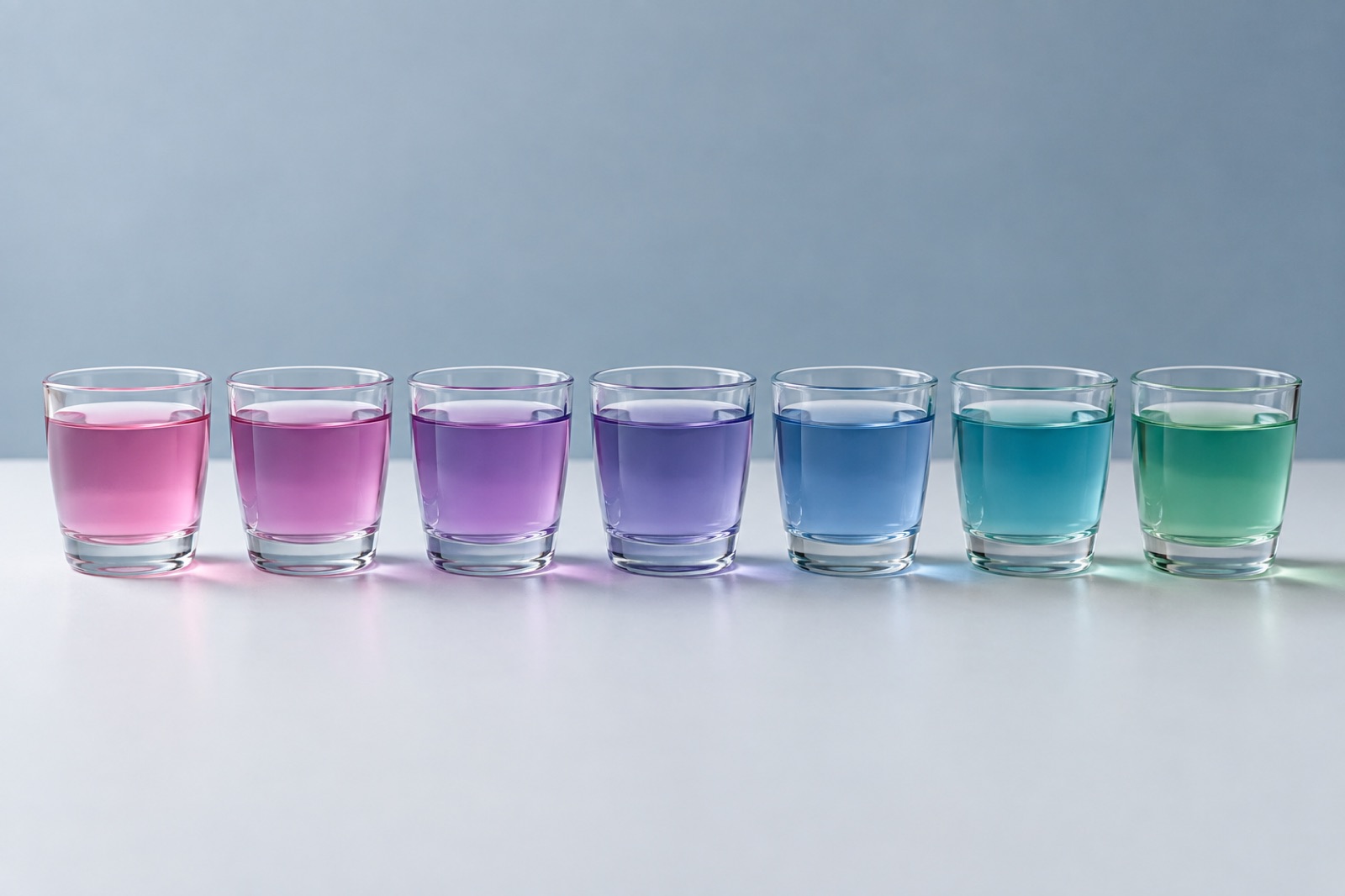
A 2025 study from Brazil diluted 96 cleansing products for children and sensitive skin to 1% and measured their pH. Liquid products ranged from 4.54 to 8.00, bar soaps from 8.01 to 11.01, and liquid syndets came closest to the physiological range. The study only measured product pH, so it says nothing about how irritating each one was. Still, it makes one point clear: two products sold as cleansers can sit far apart on the pH scale.
Does tightness in the first week mean low pH isn’t right for you?
It’s too early to decide based on first-week tightness alone. In the 2022 study of 60 people, water loss went up after the first wash in all four groups, including the group using the syndet.
A 2013 trial split 40 women with sensitive skin between two cleansers and followed them for 3 weeks. Irritation reports in the store-bought non-foaming cleanser group fell from 20% at week 1 to 10% at week 3, while the foaming cleanser group stayed at 5% at both points. The clinical scores for the two cleansers showed no statistically significant difference. That is why putting your day 1–3 scores next to your day 8–14 scores tells you more than how your skin feels on any single day.
Why log afternoon shine too?
Because if tightness eases after the switch but your afternoon shine changes, you may need to look at your whole routine again. Logging only right after your morning wash misses that shift, so add one more entry at the same time each day, for example around 3 p.m.
A 2020 systematic review that pooled 63 studies in older adults concluded that syndet and amphoteric surfactant cleansers reduced dryness more than standard soap. The data come from people aged 50 and over, so they don’t carry straight over to oily skin in your teens, 20s, or 30s. Still, the direction, that the type of cleanser can change how dry your skin feels, helps you decide what to track.
Is white foam after toner a problem?
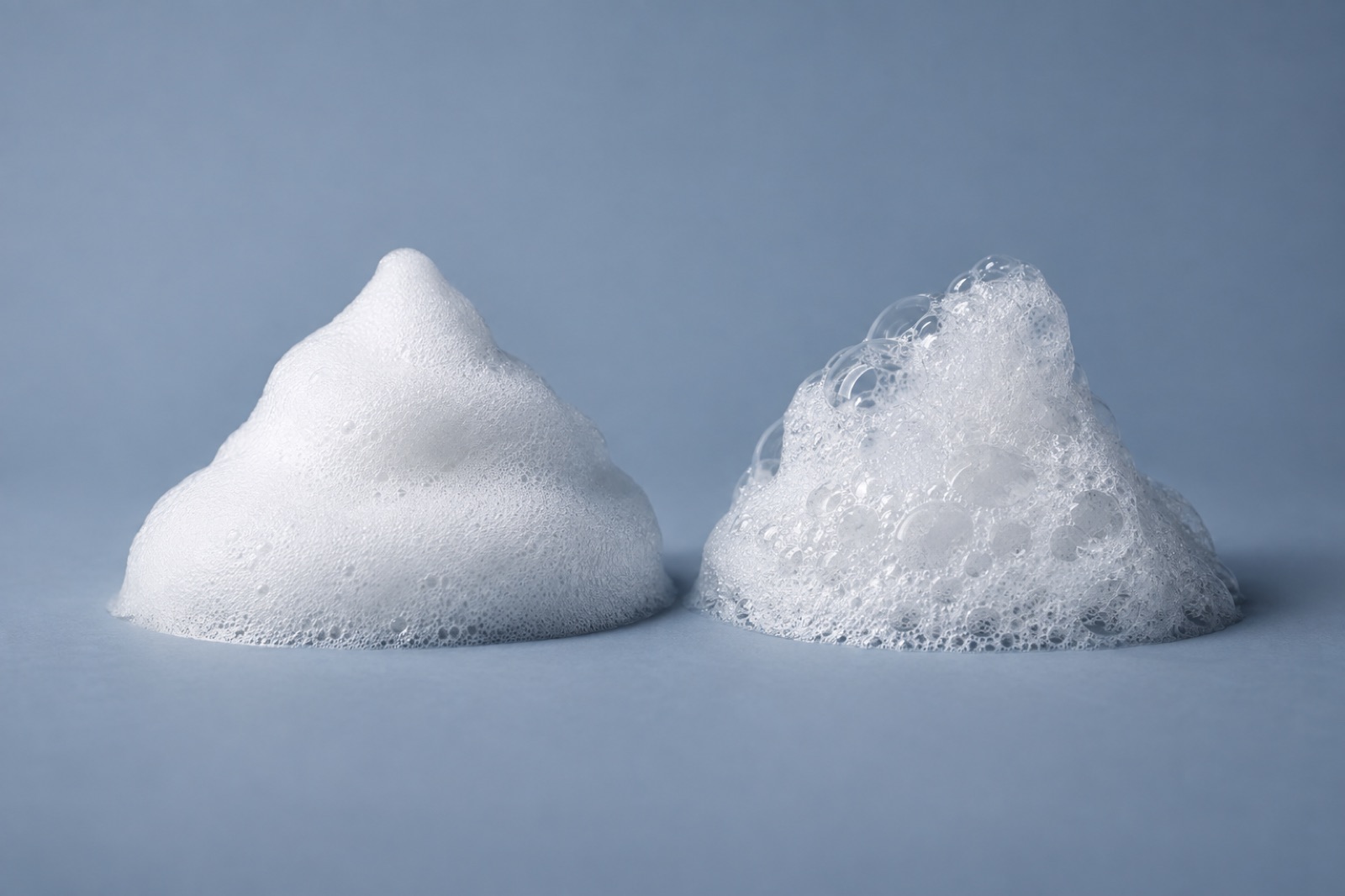
The sources behind this article include no study on white foam forming when you apply toner after washing. Instead of guessing at the cause, a practical step is to log whether the foam appears on days you rinse one or two extra times and on days you rinse as usual.
If you see only foam, with no stinging or redness, keep logging. If stinging comes with the foam, stop that pairing first. The KDCA advises keeping a face wash short, within 1 minute, so even if you add rinses, don’t add more rubbing time.
Your 2-week switch log
Score each item 0 (none), 1 (slight), 2 (clear), or 3 (strong). Log twice: within 1 minute after washing and again around 3 p.m.
| Day | Tightness right after washing | Redness | Stinging | Afternoon shine | White foam after rinsing | Notes on the day |
|---|---|---|---|---|---|---|
| Day before switching (baseline) | Old foam pH number: | |||||
| Day 1 | New foam pH number: | |||||
| Day 3 | e.g., gym class, sweat | |||||
| Day 5 | e.g., late shift, washed late | |||||
| Day 7 | Week 1 average score | |||||
| Day 10 | e.g., before your period | |||||
| Day 14 | Week 2 average score · keep or go back |
When the two weeks are up, compare your week 1 average with your week 2 average. If tightness and redness went down or stayed the same, keep using the new foam. If they went up, go back to your old foam and check once more with the same log. For the basic order of cleansing steps, continue with When to use a cleansing cream: a cleanser pairing chart by makeup level.
When is it time to see a dermatologist about a new cleanser?
- If your skin swells, oozes, or keeps itching after you start the new foam, stop without finishing the two weeks and get a dermatology appointment.
- If redness and stinging don’t ease within 1–2 weeks after going back to your old foam, have your skin checked at a clinic.
- If you are using a prescription topical medicine, talk with the prescriber before you change cleansers.
Summary of the evidence here
- In a 2025 study that measured the pH of 96 cleansing products on the market for children’s or sensitive skin (PMID 41417527), product pH ranged from 4.54 to 11.01 (mean 7.80), and bar soaps ranged from 8.01 to 11.01.
- In a 2022 study where 60 adults used one of four soaps for 7 days (PMID 34741581), the alkaline soap raised skin pH sharply at every time point, and redness was also higher than with the glycerin and creamy soaps.
- In a 2013 3-week comparison trial in 40 women with sensitive skin (PMID 24305430), irritation report rates were 20% vs. 5% at week 1 and 10% vs. 5% at week 3.
Frequently asked questions
Is skin acidic or alkaline?
Slightly acidic. Korea's national health information portal, run by the Korea Disease Control and Prevention Agency (KDCA), lists facial skin pH as pH 5.0–5.5 and advises using a cleanser with a similar mildly acidic pH. The same page says most soaps are alkaline and are not recommended. Whether your own skin feels better after a switch is something you only learn by logging it for about two weeks.
What is considered a low pH cleanser?
The number agency materials give is a facial skin pH of 5.0–5.5, and the KDCA describes syndet bars as products at about pH 5.5–7. A 2025 study that measured 96 cleansing products for children's or sensitive skin found product pH spread widely, from 4.54 to 11.01. If the label says mildly acidic or low pH but shows no number, it is more accurate to write no number listed in your log.
Why do I get white foam when I apply toner after a low pH cleanser?
The sources behind this article include no study on this. Split your days into ones where you rinse one or two extra times and ones where you rinse as usual, and note whether the foam still appears. If the foam comes with stinging or redness, stop that pairing, and if the reaction continues, have it checked by a dermatologist.
Sources
- pH analysis of 96 cleansing products for children's or sensitive skin, 2025 (PMID 41417527)B
- Skin biophysical effects of four soaps used on the forearm, 60 adults, 2022 (PMID 34741581)B
- 3-week RCT comparing two cleansers in 40 women with sensitive skin, 2013 (PMID 24305430)A
- Systematic review of skin care for older adults, 63 studies, 2020 (PMID 31945604)A
- Korea Disease Control and Prevention Agency (KDCA) National Health Information Portal — Acne (Korean)Institutional
- Korea Disease Control and Prevention Agency (KDCA) National Health Information Portal — Safe cosmetic use for teens (Korean)Institutional
Videos and forum posts never count as evidence for a fact here. Full rules: Editorial policy