Temple Acne: Rinsing the Side of Your Face and Wiping Glasses Arms
For temple acne, start with two habits: rinse all the way out to the side of your face when you wash, and wipe the glasses arms and headphones that rest there more often.

What this note covers7 sections
- Why do the temples get missed when you wash your face?
- How often should you clean glasses arms, headphones and helmet straps?
- Where should hair products go near the side of your head?
- Could a shampoo that’s fine on your scalp act differently on the side of your face?
- Two-week temple log
- When should a dermatologist take a look?
- Evidence behind this guide
| Situation | What to check | Basis |
|---|---|---|
| Morning and evening wash | Twice a day, gently, with lukewarm water, and make sure the rinse reaches the side of your face and hairline | KDCA Acne (updated 2026) · agency |
| Days you use hairspray or gel | If you don’t cover your face while spraying, an acne-like rash can appear | KDCA Acne · agency |
| Long days in glasses | Among 42 patients with rashes at eyeglass contact points, 78.5% of frames were nickel-positive | 2013 PMID 23717004 · B |
| Hair oil or pomade | In a survey of 390 outpatients, use was associated with acne (adjusted odds ratio 4.0) | 2025 PMID 41006368 · B |
| Rubbing dry with a towel | After 2 weeks of friction washing with a nylon towel, skin water loss went up (6 people) | 2018 PMID 29243811 · B |
Why do the temples get missed when you wash your face?
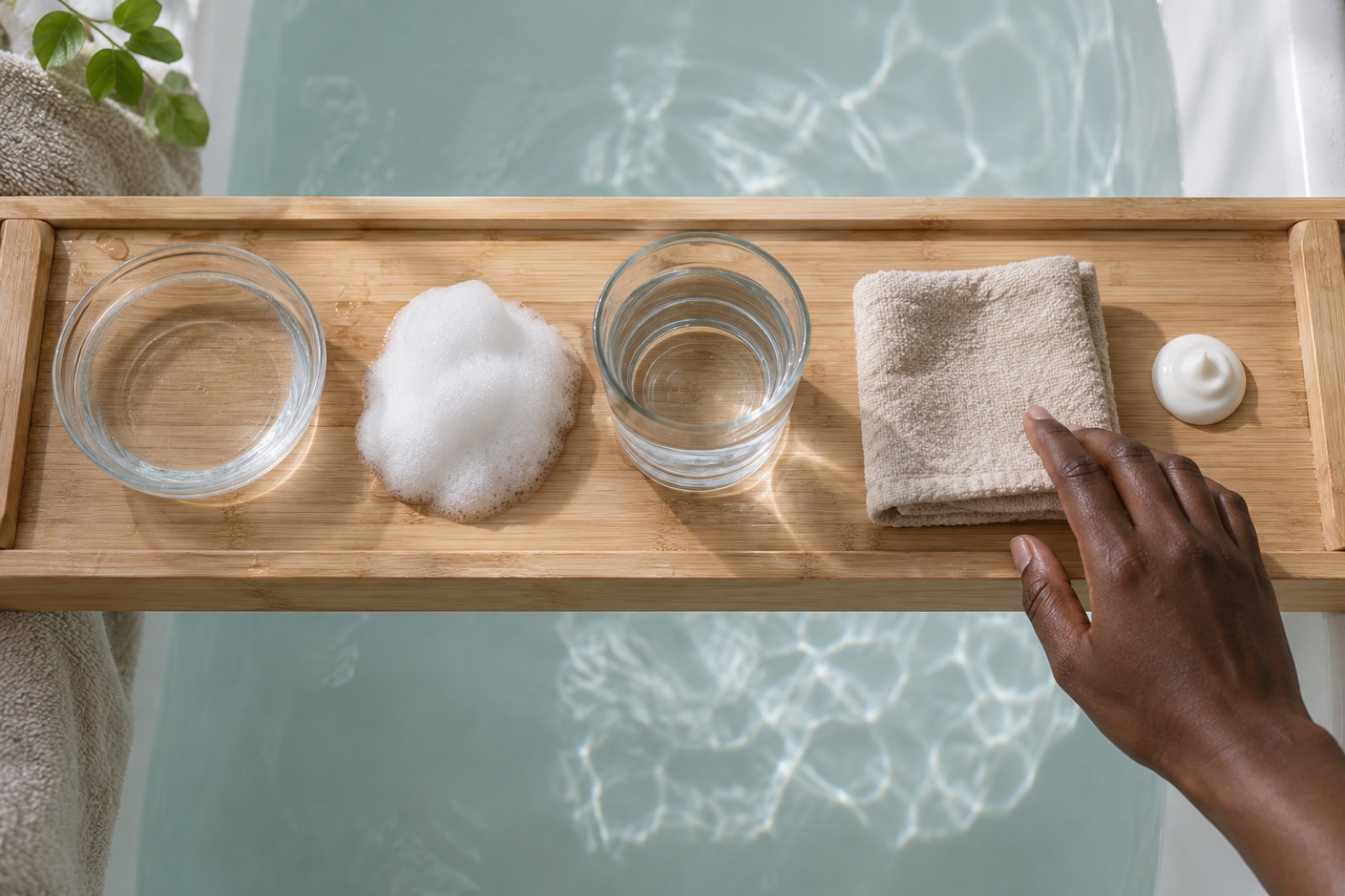
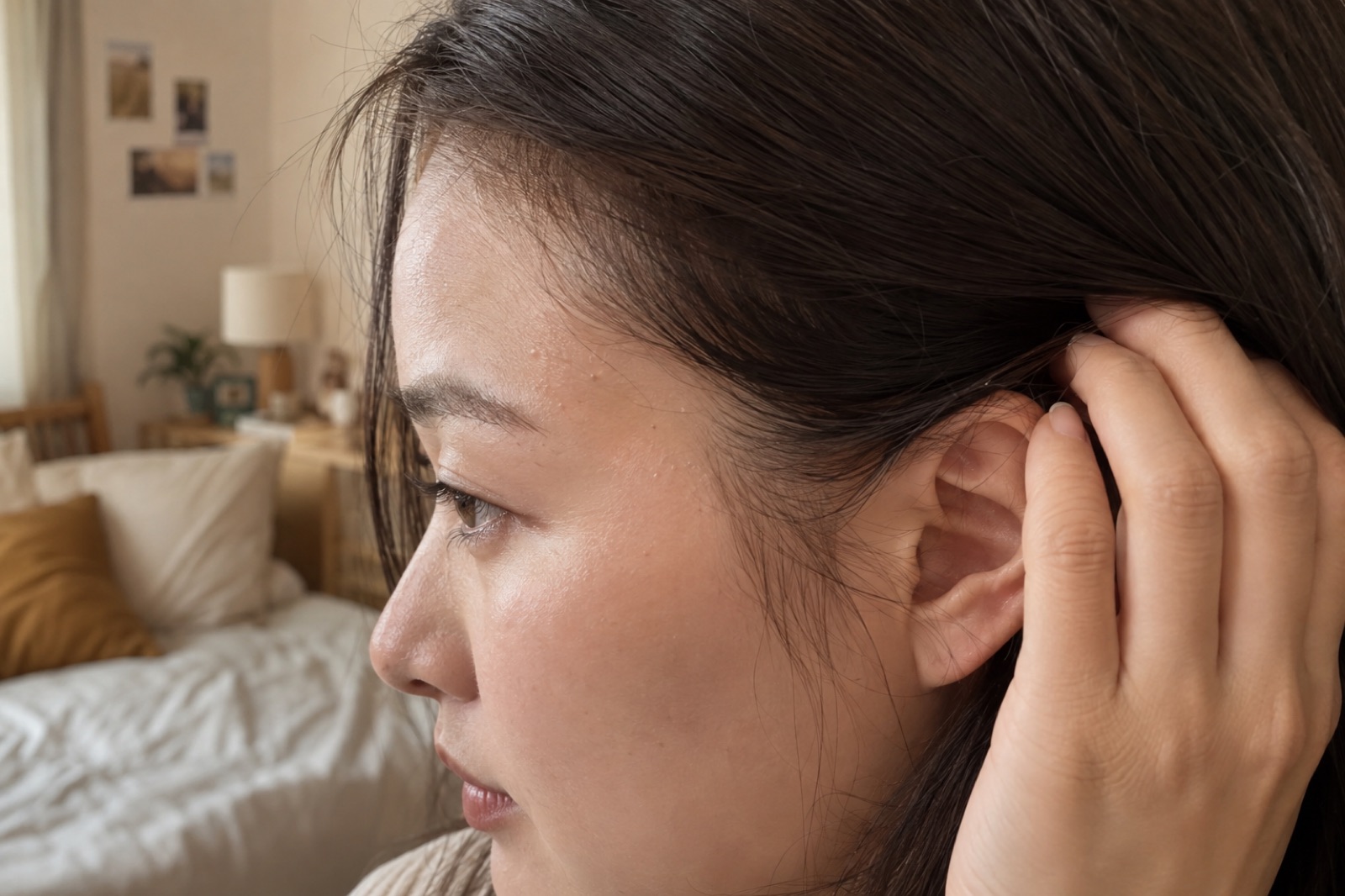
Your palms naturally scrub the middle of your face, so the temples and sideburns in front of your ears often get foam but not a full rinse. On a rushed morning when you finish washing in a minute, you can sometimes see a line of leftover suds along your hairline in the mirror.
The National Health Information Portal run by the Korea Disease Control and Prevention Agency (KDCA) says washing too often or scrubbing hard can damage the skin barrier and make acne worse, and advises washing gently with lukewarm water twice a day. So instead of washing more often, widen your palms to the front of your ears on the last rinse and splash water there once more. Don’t rub when you dry off, either. In a 2018 study, 6 healthy adults washed one forearm twice a day for 2 weeks with a nylon towel and soap; compared with the side washed with soap alone, water loss rose and natural moisturizing factor dropped on the rubbed side (grade B, small study).
How often should you clean glasses arms, headphones and helmet straps?
No study has set a right number, so this guide uses a simple rule: clean them on every day they touched your skin. Wipe glasses arms and nose pads each evening after you wash your face, and wipe headphone cushions and helmet straps on days you sweat while wearing them.
That schedule matters more in hot weather. According to the KDCA portal (updated 2026), oil production rises by 10% for every 1°C (about 1.8°F) increase in body temperature, so acne that stayed quiet can flare in summer. If you bike to work in a helmet or wear headphones through a full day of online classes, press the sweat off with a towel after taking them off and wash soon after. The American Academy of Dermatology (AAD) suggests patting sweat away rather than wiping during exercise, and cleaning shared gear such as helmets before you use it.
Glasses deserve one more look. In a 2013 Korean study, 42 patients with rashes where their glasses touched were patch tested, and nickel sulfate was the most common positive result at 73.8%. If the itching and redness follow the shape of the frame, it may be a reaction to metal rather than acne.

Where should hair products go near the side of your head?
Start oils and waxes on the lengths of your hair, away from the hairline, and wash off what’s left on your palms before touching your face. On days you use spray or gel, cover your face with a hand or a sheet of paper while you apply it.
The second tip comes from the KDCA material: when spray lands on the face, the cosmetic can cause an acne-like rash, so the portal says to cover your face. A 2025 study of 390 people visiting a dermatology clinic in Ethiopia also found hair oil and pomade use to be a factor associated with acne (adjusted odds ratio 4.0). It surveyed only clinic visitors at a single point in time, though, so it cannot show that hair oil is the cause. Moving where you apply it toward the lengths of your hair is an editorial rule based on these two sources.
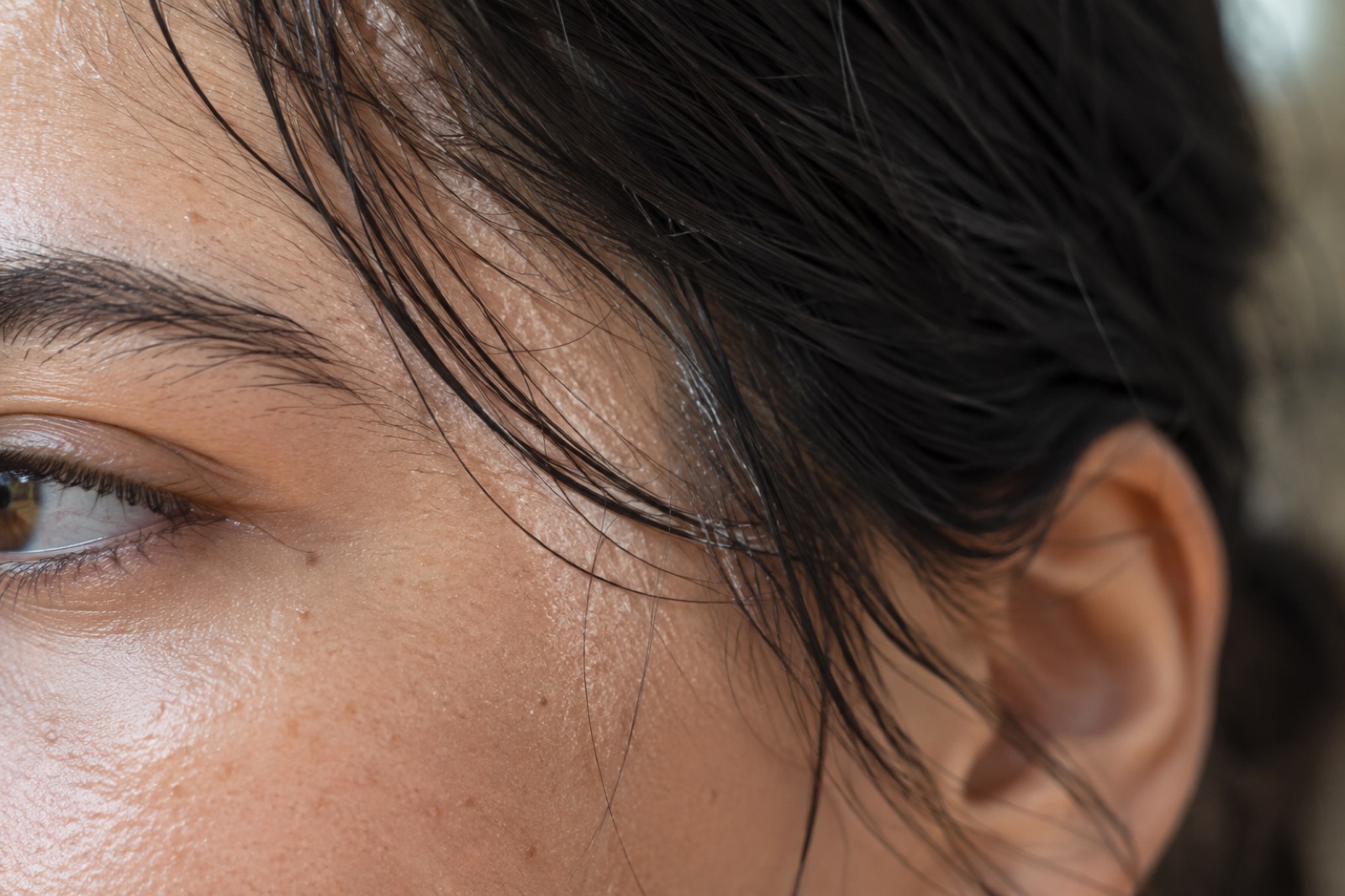
Could a shampoo that’s fine on your scalp act differently on the side of your face?
The same substance can cause a different skin reaction depending on where it lands. So even a shampoo that never bothered your scalp is worth watching separately at the temples, where rinsing often falls short.
A 2012 study applied the same irritants to the scalp, face and back of 10 men and found that how strong the reaction was varied by site, depending on the substance and its concentration (grade A, small study). Among shampoo ingredients, cocamidopropyl betaine came out with a 1.7-fold risk of contact allergy in a 2022 review of 70 studies of hairdressers, but that reflects job exposure where it is handled many times a day. Before switching shampoos, first check whether you give your temples one more rinse after washing your hair.
Two-week temple log
| What to do | When | How often | What to write down |
|---|---|---|---|
| Rinse the side of your face and sideburns | End of your morning and evening wash | Every time you wash | Whether foam was left at the hairline (yes/no) |
| Wipe glasses arms and nose pads | After your evening wash | Daily | Mark the days you wiped them, and whether it itches along the frame |
| Wipe headphone cushions and helmet straps | Right after taking them off | Every day you sweat in them | How long you wore them (minutes) |
| Cover your face when using spray or gel | While styling | Every use | Whether you covered it, and the product name |
| Check the bumps on your temples | Sunday night | Once a week | Count, any itching or red border, a photo under the same light |
After 2 weeks, put your week 1 and week 2 photos side by side and see whether the bumps cluster along the line of the glasses arm or the hairline. If they gather on one side only, also note any habit that differs left to right, such as a pillow you always lie on that side of or headphones you hang on one ear.
When should a dermatologist take a look?
- If an itchy red rash spreads in the shape of an eyeglass frame or where a new hair product touches, ask a dermatologist whether a patch test can show a reaction to metal or an ingredient.
- The KDCA notes that even care under a doctor is given 6 to 8 weeks of steady use before the plan is changed. If nothing has changed after 6 to 8 weeks of logging, book a dermatology appointment.
- If the tiny bumps turn into swollen, painful lumps or pus keeps coming back, get seen before scarring sets in.
Evidence behind this guide
- In a 2013 Korean study of 42 patients with rashes at eyeglass contact points, 78.5% of frames were nickel-positive, and nickel sulfate was the most common positive patch test (73.8%).
- In a 2025 survey of 390 dermatology outpatients in Ethiopia, hair oil and pomade use was associated with acne (adjusted odds ratio 4.0, cross-sectional study).
- The KDCA National Health Information Portal (updated 2026) explains that oil production rises by 10% for every 1°C increase in body temperature.
Frequently asked questions
Can glasses cause acne on your temples or under the nose pads?
The sources behind this guide include no study showing more acne where glasses touch. But in a 2013 Korean study of 42 patients with rashes at eyeglass contact points, 78.5% of their frames tested positive for nickel, so red bumps there may be a metal allergy. If they itch and spread along the frame, have a dermatologist check them.
Why is my hairline near the temples itchy and red with tiny bumps?
When itching stands out, a contact reaction to a hair product or shampoo ingredient is worth considering alongside acne. A 2022 review of hairdressers found a 1.7-fold risk of contact allergy to the shampoo surfactant cocamidopropyl betaine, but that reflects daily work exposure, not ordinary use. If it began after a new product, stop that product, and get checked if it spreads.
Is temple acne a sign of a spleen or pancreas problem?
We found no evidence in the studies and health organization materials reviewed for this guide that links areas of the face to organs like the spleen or pancreas. Korea's KDCA and the Korean Dermatological Association describe acne factors as oil production, clogged follicle lining, bacteria, and outside triggers such as cosmetics and friction. So for the temples, a more practical first step is to log the hair products, glasses and headphones that touch that spot.
Sources
- Korea Disease Control and Prevention Agency (KDCA) National Health Information Portal — Acne (Korean, updated 2026-08-03)Institutional
- American Academy of Dermatology (AAD) — Is your workout causing your acne?Institutional
- Micro-scratches on eyeglass frames and allergic contact reactions, 2013 (PMID 23717004)B
- Acne prevalence and associated factors among dermatology outpatients in Ethiopia, 2025 (PMID 41006368)B
- Systematic review of skin toxicity from hair cosmetic ingredients including CAPB, 2022 (PMID 35805241)A
- Repeated friction washing and loss of stratum corneum components, 2018 (PMID 29243811)B
- Site differences in nonimmunologic contact urticaria on the scalp, face and back, 2012 (PMID 22093067)A
Videos and forum posts never count as evidence for a fact here. Full rules: Editorial policy
What to check when choosing a product for this routine
Check the criteria below before the product name. Each item can be found on the full ingredient list or in the product description.
| Item | What to look for | Why |
|---|---|---|
| pH on the label | Whether the description gives a weakly acidic range with an actual pH number | You spread it out to the hairline and side of the face right after washing, so a clear number gives your notes a fixed point to compare |
| Fragrance | Whether fragrance appears in the full ingredient list, and if so, how far down | Hair products and eyeglass frames already touch this spot, so adding fewer new variables makes it easier to sort out what is behind the bumps |
| Finish | A thin, watery liquid with no mention of a sticky after-feel | Side hair brushes this area all day, and leftover residue makes strands cling and blurs what you are tracking |
| Irritation testing disclosed | Whether the brand says how irritation was tested | Everyone reacts differently, but you can use it knowing under what conditions the result was checked |
Product from this site's operator · KW Cosmetic Content Team
Revive Therapy N.F TonerCosmetics do not replace the diagnosis or treatment of a skin condition.