Forehead Acne Causes: Wash Order for Bangs and Hat Days
For forehead acne, start with the routine: on days you wear bangs or a hat, shampoo first and wash your face last, and wash your bangs more often.
What this note covers7 sections
- Why do small bumps form on your forehead?
- Do bangs and hair oil play a part in forehead acne?
- What should you change on days you wear a hat or helmet?
- How should you handle whiteheads on your forehead?
- Your wash and shampoo order, by day type
- When should a doctor look at your forehead bumps?
- What this article is based on
| Item | Detail | Basis |
|---|---|---|
| Weeks you wear bangs | If you have many forehead breakouts, wash your bangs more often and wash your hair on a regular schedule | KDCA (Korea) · Institution |
| Days you use hair oil | In a survey of 390 dermatology outpatients, using hair oil or pomade was linked to acne (AOR 4.0) | 2025 PMID 41006368 · B |
| Forehead skin | In adult women with acne, even normal-looking forehead skin had a larger follicle diameter than controls (people without acne), and of the 791 follicles observed, more had a thickened border (68%) or a hyperkeratinized border (65%) | 2018 PMID 29369333 · B |
| Season | Teens with acne had higher oil output and water loss than teens without acne in every season, all year | 2015 PMID 26091385 · B |
| Face washing | Wash gently with lukewarm water twice a day | KDCA (Korea) · Institution |
Why do small bumps form on your forehead?
The little bumps on a forehead are often plugs of oil and dead skin sitting in the pore opening, and the forehead is a spot that clogs easily to begin with. A 2018 study used reflectance confocal microscopy to look at 15 adult women with acne; even their normal-looking forehead skin had a larger follicle diameter than controls (people without acne), and of the 791 follicles observed, more had a thickened border (68%) or a border with built-up keratin (65%).
Oil output matters too. In a 2015 study, 7 teenage boys with acne produced more oil than 10 without acne in every season across a full year. That sample is very small, so read it as a hint only, but when a clog-prone area also sits under bangs or a hat, it is a reason to plan a separate order for those days.
Do bangs and hair oil play a part in forehead acne?
Some observations point that way, so during weeks you wear bangs, decide first how often you wash them and what you put on them. A study published in 2025 surveyed 390 people visiting the dermatology outpatient clinic of a university hospital in Ethiopia in 2023, and hair oil or pomade use came up as a factor linked to acne (AOR 4.0).
A 2023 systematic review that pooled 59 papers on hair lipids also collected reports of higher hair lipid levels in some conditions, acne among them. Both are observational, so neither proves cause. The Korea Disease Control and Prevention Agency (KDCA), through its National Health Information Portal, advises washing your hair regularly and washing your bangs more often if your forehead breaks out a lot.
What should you change on days you wear a hat or helmet?
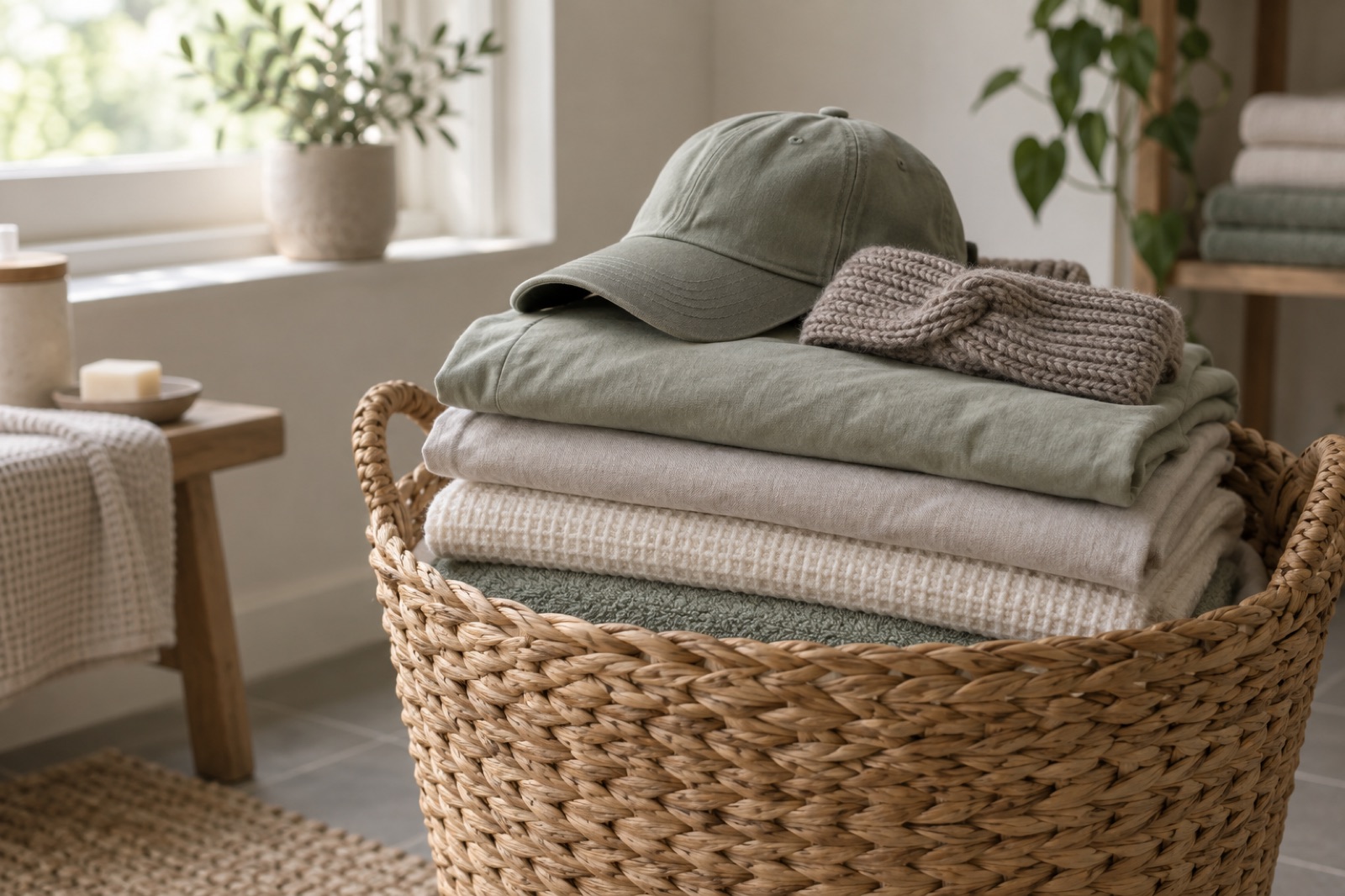
On hat or helmet days, plan two moments ahead of time: right after you take it off, and right after you get home. When the hat comes off, blot the sweat on your forehead instead of rubbing it, and once you are home, wash your face gently with lukewarm water.
The research gathered for this article has no direct study showing that hats or helmets themselves increase forehead acne. So the way to check is to write down the days you wear one (bike commuting, outdoor work, a gym cap) and compare the count of new tiny bumps with days you don’t. Picking a fixed laundry day for the inner hat band and headbands keeps the log steady.
How should you handle whiteheads on your forehead?
With closed bumps, cutting down on what touches the area and tracking it over a few weeks may help more than squeezing or scrubbing. The KDCA suggests washing twice a day with lukewarm water, choosing low-oil cosmetics and products labeled non-comedogenic, and using a moisturizer made for acne-prone skin.
If your forehead and nose look shiny while your cheeks feel tight, you can vary how much of the same product you use by area instead of buying two sets: one thin layer on the forehead, a second layer on the cheeks. Bring in only one new product at a time so you can tell why the forehead bumps went up.
Your wash and shampoo order, by day type
| Day type | Morning | Daytime | Evening |
|---|---|---|---|
| Bangs down | Shampoo and rinse first, face wash last | If your bangs get oily, pin them back | Wash your bangs (daily during breakout-heavy weeks) |
| Hat or helmet on | Check the inner band; keep hair oil off the ends of your bangs | Blot sweat each time you take it off | Lukewarm face wash right after you get home; check the hat laundry day |
| Neither | One of your two daily face washes | Count how often you touch your forehead | One of your two daily face washes |
| Every 2 weeks | Total new tiny bumps for each of the three day types | Number of days you used hair oil or wax | One thing to change over the next 2 weeks |
Next to the table, add one line with the time you washed your hair that day and the name of anything you put on your bangs. If the two-week totals show bumps clustering on hat days, change just one hat-related thing for the next two weeks.
When should a doctor look at your forehead bumps?
- If the tiny bumps turn red and swollen, fill with pus, or become deep, painful lumps, see a dermatologist.
- If you run the order table twice (about 4 weeks) and new bumps don’t go down, bring your log to a dermatologist.
- If the bumps itch and spread quickly in a similar size, it may be a different follicle problem, so have a dermatologist check.
- If red, oily flaking keeps coming back along your hairline, consider a medical visit.
What this article is based on
- A 2025 study (PMID 41006368) of 390 dermatology outpatients in Ethiopia found an acne prevalence of 26.2%, and hair oil or pomade use was a factor linked to acne (AOR 4.0).
- A 2018 study (PMID 29369333) of 15 adult women with acne reported that of the 791 follicles observed in normal-looking forehead skin, 68% had a thickened border and 65% a hyperkeratinized border, more than in controls (people without acne).
- A 2023 review (PMID 35218566) of 59 papers on hair lipids collected reports of higher hair lipid levels in some conditions, including acne.
Frequently asked questions
Why do I get small bumps on my forehead?
Those little bumps are often pores plugged with oil and dead skin cells. A study of 15 adult women with acne found that even normal-looking forehead skin had larger follicles and extra keratin buildup, which suggests the forehead is a spot that clogs easily.
How should I handle whiteheads on my forehead?
Rather than rubbing or squeezing, it may help to sort out what touches your forehead (bangs, hair oil, hats) and wash gently with lukewarm water twice a day. Korea's KDCA also suggests low-oil products labeled non-comedogenic. If bumps keep increasing after a few weeks of notes, see a dermatologist.
If my forehead and nose are oily but my cheeks are dry, do I need separate products?
Not necessarily. You can use the same product in different amounts and layers by area, such as one thin layer on the forehead and nose and a second layer on tight cheeks. If you do add something new, add one product at a time so you can tell which product your skin reacted to.
Sources
- Confocal microscopy of hair follicles in adult female acne, 2018 (PMID 29369333)B
- Acne prevalence and associated factors in 390 dermatology outpatients in Ethiopia, 2025 (PMID 41006368)B
- Systematic review of human hair lipid composition, 59 studies, 2023 (PMID 35218566)A
- Seasonal changes in facial skin with and without acne, 2015 (PMID 26091385)B
- Korea Disease Control and Prevention Agency (KDCA) National Health Information Portal — Acne (Korean)Institutional
Videos and forum posts never count as evidence for a fact here. Full rules: Editorial policy
What to check when choosing a product for this routine
Check the criteria below before the product name. Each item can be found on the full ingredient list or in the product description.
| Item | What to look for | Why |
|---|---|---|
| pH on the label | Whether a mildly acidic range is written as numbers (for example, 5.5–6.5) | It goes on right after you wash twice a day, so you can compare it on the same basis as your cleanser |
| Pore-clogging check | Whether it says non-comedogenic and whether the brand explains how that was checked | It is one of the choosing points in the everyday skin guidance from Korea's disease control agency |
| Oiliness | Whether oils sit near the top of the full ingredient list | Korea's disease control agency suggests low-oil products, so you add less oil to a forehead that bangs already cover |
| Irritation testing | Whether the brand says how irritation was tested | Results vary from person to person, but it is a fact you can check when picking something for sweaty hat days |
Product from this site's operator · KW Cosmetic Content Team
Revive Therapy N.F TonerCosmetics do not replace the diagnosis or treatment of a skin condition.