Cheek Acne Causes: A 4-Week Order for Dry, Sensitive Cheeks
For cheek acne, adjust one thing at a time in this order: stop washing hard, moisturize right after cleansing, then cut down friction from masks, pillows, and your phone.
What this note covers7 sections
- How is cheek acne different from forehead acne?
- Are small bumps on the cheeks a barrier problem or a dead skin problem?
- How much should you ease up on cleansing?
- If both cheeks got worse after wearing a mask, is the mask to blame?
- A 4-week order for dry, sensitive cheeks
- When should cheek acne go to a dermatologist?
- The evidence in brief
| Item | Detail | Basis |
|---|---|---|
| Where it shows up most | In a survey of 1,236 acne patients at 17 hospitals in Korea, acne was most common on the forehead and cheeks, and acne on the cheeks was more severe | 2011 PMID 21595660 · B |
| Timing when cheeks are the problem | Acne on the cheeks and chin tends to be deep, with a higher risk of redness, pigment changes, and scars, so early care from a doctor is stressed | KDCA · Institution |
| During mask-wearing periods | In a survey of 2,326 people in Saudi Arabia, 44.4% had mask-related skin problems, and the cheeks (46.8%) were the most common area | 2022 PMID 36483886 · B |
| Sensitive cheeks | When the cheeks of 42 Korean women were analyzed, the 23 who felt their skin was sensitive had a more diverse and differently composed fungal community | 2020 PMID 32664687 · B |
| What to log | Stress, lack of sleep, smoking, drinking, and periods were the factors patients said made acne worse | 2011 PMID 21595660 · B |
How is cheek acne different from forehead acne?
The pore-clogging process is the same, but cheek acne more often leans toward deeper, longer-lasting spots, so it gets its own order of care. In a 2011 survey of 1,236 acne patients at 17 hospitals in Korea, acne was most common on the forehead and cheeks, and cheek acne was more severe than forehead acne.
The National Health Information Portal run by the Korea Disease Control and Prevention Agency (KDCA), Korea’s national public health agency, also advises getting medical care early for acne on the cheeks and chin, since lesions there tend to be deep and carry a higher risk of redness, pigment changes, and scars. For the forehead, you look first at what touches it, like bangs and hair products; for the cheeks, the starting point is lowering the intensity of the things your hands do every day, like washing and moisturizing.
Are small bumps on the cheeks a barrier problem or a dead skin problem?
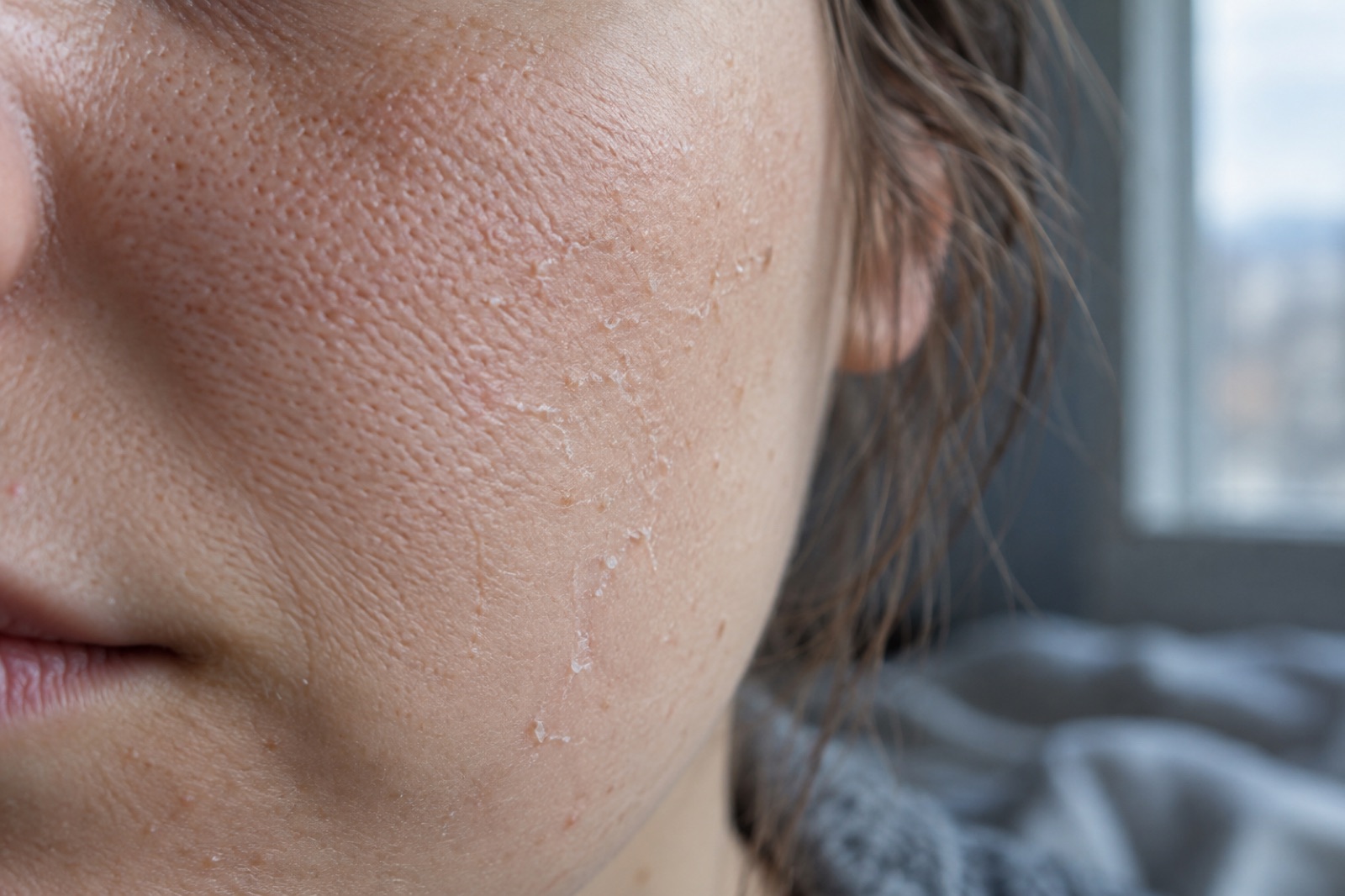
Rather than sorting it into one or the other, it is more practical to decide what to do first based on whether tightness or stinging comes with it. In a 2020 study that analyzed the right cheek of 42 Korean women, the 23 who felt their skin was sensitive had a more diverse and differently composed fungal community, which shows the cheek is a place where sensitivity shows up.
So if you add an exfoliating product as soon as you see small bumps on your cheeks, you may just pile irritation onto already sensitive skin. This study has limits: the sample was small, and people judged their own sensitivity. If your skin feels tight, adjust cleansing and moisturizing for 2 weeks first, and look at clogged-pore care separately only when bumps increase without that feeling.
How much should you ease up on cleansing?
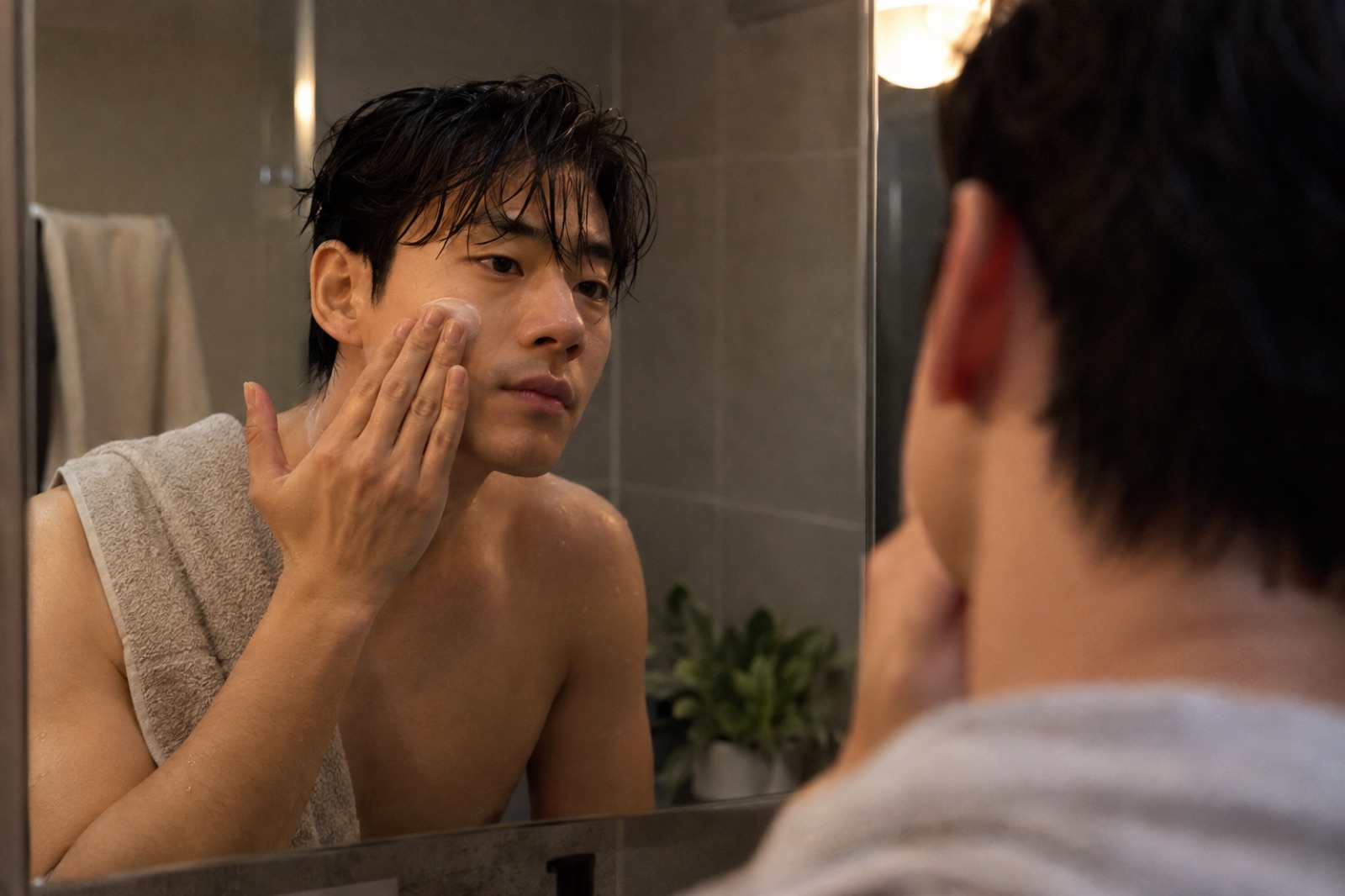
In week 1, change only how often and how hard you wash, and leave other products as they are. KDCA advises washing gently twice a day with lukewarm water and using a slightly acidic cleanser.
If your cheeks feel shiny and you have been washing three or more times a day, rubbing without lather, or wiping your face with a towel, stop all of that this week. Press the towel against your cheeks just to lift the water. If your cheeks feel less tight this week, that is a clue that how hard you wash was the first thing to fix in your cheek acne routine.
If both cheeks got worse after wearing a mask, is the mask to blame?
It may be related, but it is hard to call it the cause, so it makes sense to check by logging how long you wear one. In a 2022 cross-sectional survey of 2,326 people in Saudi Arabia, 44.4% had mask-related skin problems, the most common area was the cheeks (46.8%), and redness, itching, and acne were the main complaints.
In the same survey, contact reactions were significantly more common among health care workers. If your job has you in a mask all day, start week 3 by writing down how long you wear it and how often you change it. The mask is not the only thing touching your cheeks, so cut back on pillowcases and your phone one at a time in the same week. That said, the sources for this guide include no direct study showing that pillows or phones increase cheek acne.

A 4-week order for dry, sensitive cheeks
| Week | What you change this week | What you leave as is | What to note daily |
|---|---|---|---|
| Week 1 | Twice a day, lukewarm water, wash by hand, pat with the towel | Moisturizer, toner, makeup | How many times you washed, tightness right after washing (yes/no) |
| Week 2 | Apply a low-oil moisturizer right after washing, cheeks first | Only one new product at most | Afternoon tightness, redness |
| Week 3 | Mask hours and changes, pillowcase change day, which side you talk on the phone | Weeks 1 and 2 routine | Time things touched your cheeks, new spot count (left, right) |
| Week 4 | No changes, just compare | The whole routine | Photos of both cheeks in the same lighting as week 1 |
Next to each daily entry, add one line with the time you fell asleep, where you are in your menstrual cycle, and stressful events like late nights at work or exams. These were the factors patients in the 1,236-person survey named as making acne worse, so you can pick out days that line up with changes on your cheeks.
When should cheek acne go to a dermatologist?
- If deep, painful, swollen lumps keep coming back on your cheeks, see a dermatologist without waiting for the chart to finish. Cheeks are a place where redness, pigment, and scars are easily left behind.
- If your skin burns and redness spreads every time you apply skincare, it may be a skin condition other than acne, so have a dermatologist check it.
- If an itchy red rash forms along the lines where your mask touches, consider getting seen to check for a contact reaction.
- If the number of new spots does not go down after finishing the 4-week chart, bring your log to a dermatologist.
The evidence in brief
- In a 2011 study (PMID 21595660) of 1,236 acne patients at 17 hospitals in Korea, acne was most common on the forehead and cheeks, and acne on the cheeks was more severe.
- In a 2022 study (PMID 36483886) of 2,326 people in Saudi Arabia, 44.4% had mask-related skin problems, and the most common area was the cheeks (46.8%).
- A 2020 study (PMID 32664687) that analyzed the cheeks of 42 Korean women reported that the fungal community of the 23 who felt their skin was sensitive was more diverse than in the non-sensitive group.
Frequently asked questions
When I use barrier cream I break out on my chin, and when I skip it I break out on my cheeks. What should I do?
Instead of dropping moisturizer, split where and how much you apply. Put it on your tight cheeks first right after cleansing, and use just one thin layer on your chin. In a survey of 1,236 acne patients in Korea, cheek acne was more severe than forehead acne, so keep moisturizing your cheeks. If you change creams, change only one and log new spots on your chin and cheeks separately for 2 weeks.
Are small bumps on the cheeks a skin barrier problem or a dead skin problem?
It is hard to draw a clean line between the two. If tightness, stinging, or redness comes with them, adjust cleansing and moisturizing for 2 weeks first; if only rough little bumps are increasing without those feelings, read it as clogged pores and keep logging. Decide on adding an exfoliating product after that.
My cheeks got worse after I started wearing a mask. Could the mask be the cause?
It may be related. In a 2022 survey of 2,326 people in Saudi Arabia, 44.4% had mask-related skin problems, and the most common area was the cheeks (46.8%). Because it was a survey, though, it cannot confirm the mask as the cause, so logging how long you wear it alongside how your cheeks look is the practical step.
Sources
- Multicenter epidemiology of acne in Korean patients: 1,236 patients, 2011 (PMID 21595660)B
- Facial skin conditions from mask wearing during COVID-19: 2,326 people, 2022 (PMID 36483886)B
- Cheek skin microbiome and mycobiome differences by skin sensitivity: 42 people, 2020 (PMID 32664687)B
- Korea Disease Control and Prevention Agency, National Health Information Portal — Acne (Korean)Institutional
Videos and forum posts never count as evidence for a fact here. Full rules: Editorial policy
What to check when choosing a product for this routine
Check the criteria below before the product name. Each item can be found on the full ingredient list or in the product description.
| Item | What to look for | Why |
|---|---|---|
| pH on the label | Whether a slightly acidic range is printed as a number (e.g., 5.5–6.5) | In the week you switch to a slightly acidic cleanser, you can match the steps after cleansing to the same standard |
| Clogged-pore evaluation | Whether it is labeled non-comedogenic and the brand says how that was checked | Korea's national health agency (KDCA) advises choosing products labeled non-comedogenic |
| How you apply it | Whether it is a watery texture you can press on with your palms, without a cotton pad | It removes one source of friction on cheeks that are dry and sensitive |
| Irritation testing | Whether the brand says how irritation was tested | Results vary by person, but it gives you a basis for comparing products in week 3 of the chart |
Product from this site's operator · KW Cosmetic Content Team
Revive Therapy N.F TonerCosmetics do not replace the diagnosis or treatment of a skin condition.