How to Wear Makeup on a Breakout Day: Cover, Touch Up, Take It Off
On a breakout day, decide first how much you will cover, blot and press rather than add layers during the day, and take everything off at night without rubbing.
What this note covers8 sections
- Can you wear makeup the morning a breakout shows up?
- Can you put makeup on pimples with pus?
- What do you do when makeup breaks down after lunch?
- What order do you remove a full face of makeup in?
- Why does makeup make my skin break out?
- Breakout-day makeup log
- When should a dermatologist see the spots you are covering?
- Where the evidence comes from
| Checkpoint | Detail | Basis |
|---|---|---|
| How long makeup was worn | 18 women with acne learned how to use acne-oriented makeup and wore it for 2–4 weeks, and their lesion counts did not go up (no control group) | 2005 PMID 16048760 · B |
| When to check | 86 people with visible facial skin conditions such as acne, rosacea, or scars were taught camouflage makeup; in a survey one month later, 63 (73%) responded and their quality-of-life scores had improved | 2012 PMID 22759904 · B |
| Where opinions split | In a survey answered by 334 Italian dermatologists, views on allowing camouflage makeup for female acne patients were roughly split in half | 2017 PMID 27284779 · B |
| How you take it off | When 35 women with sensitive facial skin changed only their removal method, to a cleansing oil that needs less rubbing, for 4 weeks, dryness, redness, and water loss went down | 2021 PMID 33040474 · B |
| Washing at home | Double cleanse on days you wear sunscreen or makeup; otherwise wash gently with lukewarm water twice a day | Korea Disease Control and Prevention Agency (KDCA) · Korean agency |
Can you wear makeup the morning a breakout shows up?
There is no clear evidence that you have to stop wearing makeup, so the practical move is to set how much you cover and how you take it off. In a 2005 study, 18 women with acne learned how to use makeup and kept wearing it for 2–4 weeks; their lesion counts did not rise, and their anxiety and quality-of-life scores improved.
Still, it was a small study with no control group, so it cannot be stretched into “makeup is fine.” Experts disagree, too. In a 2017 survey of Italian dermatologists (334 of 1,508 responded), more than half said they allow camouflage makeup only in special cases, and opinions were roughly split for and against. So on a work or school morning, first decide how much you will cover today and write down the number of new spots; after a few days, that gives you something to base the call on whether to keep wearing makeup.
Can you put makeup on pimples with pus?
The sources behind this article include no study that directly compares what happens when pus-filled spots are covered with makeup. Instead, the Korean Dermatological Association, a Korean professional society, lists rubbing, mechanical irritation, and pore-clogging cosmetics as things that make acne worse, so the rule is to put the least coverage on pus-filled spots.
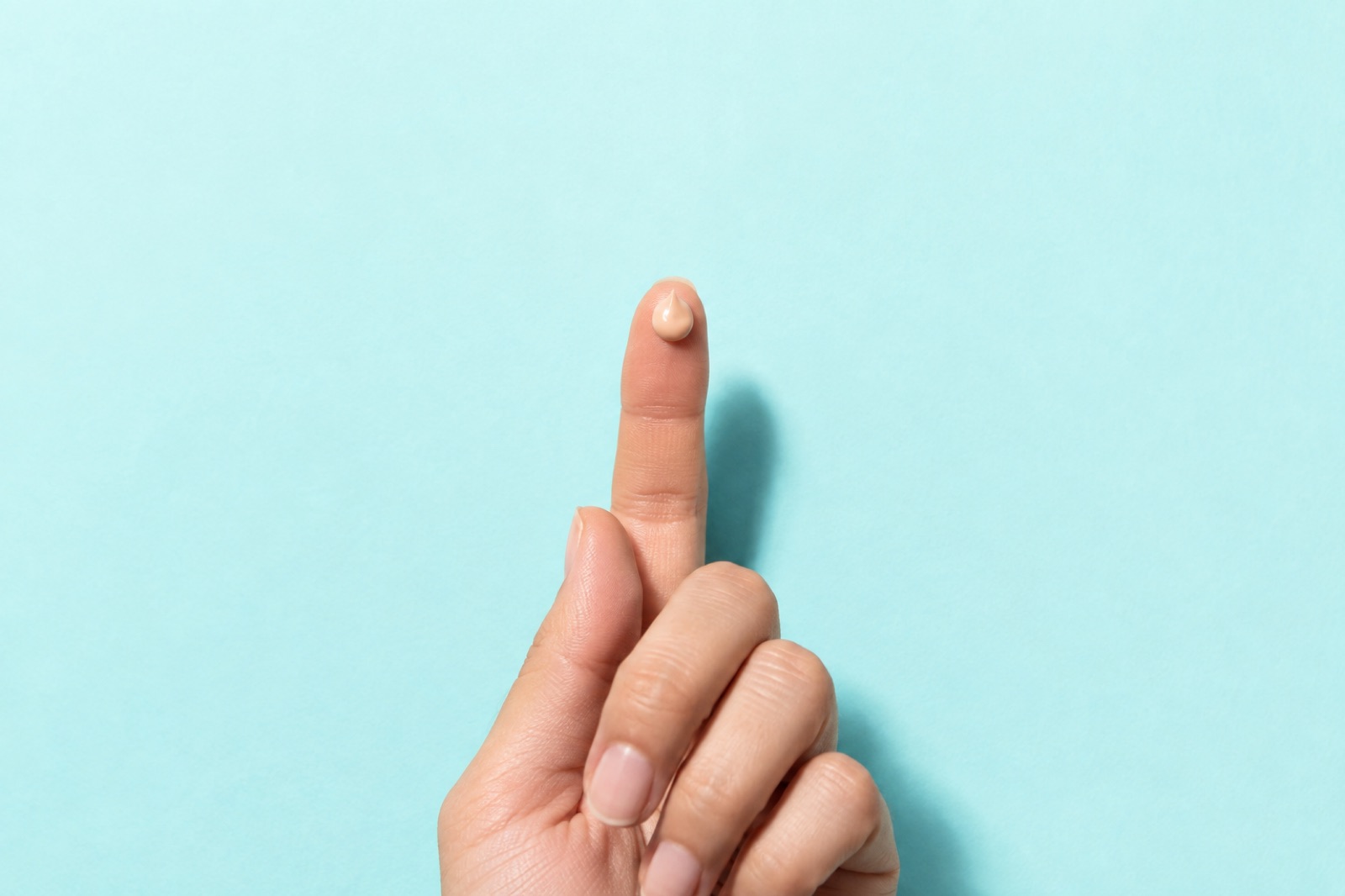
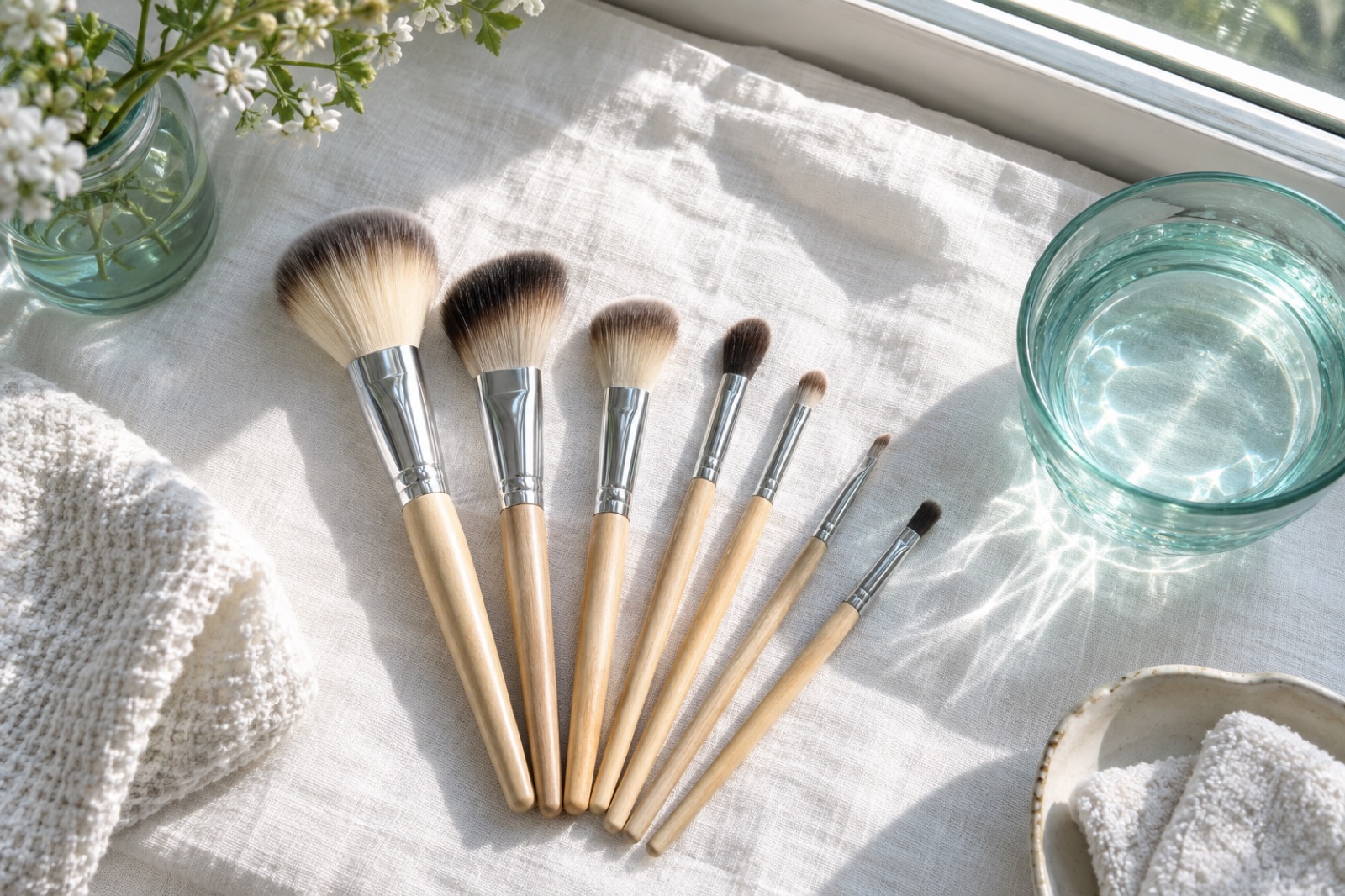
Before you leave, spread base over your whole face just once, and gently press product onto the spots you want to cover with the tip of a sponge or brush. Do not press the head of a pus-filled spot with a tool or squeeze it with your fingers. The Korea Disease Control and Prevention Agency (KDCA), Korea’s national public health agency, also advises keeping your hands off your face and not squeezing or scratching with dirty hands. Wash the tools you used for covering that evening, and do not reuse the same side the next day.
What do you do when makeup breaks down after lunch?
In the afternoon, tidy up by lifting off shine instead of adding a new layer. Blot with oil-absorbing paper, and if you limit reapplying concealer over breakouts to once a day, the layers will not build up.
Days with a face mask, gym class, or an after-work workout bring friction and sweat together. On those days, write the number of touch-ups and how many times you touched your face in the afternoon box of your log. The next day, see whether new spots line up with where mask straps sit or where your hands tend to go; that tells you whether to change a habit before you change a product.
What order do you remove a full face of makeup in?
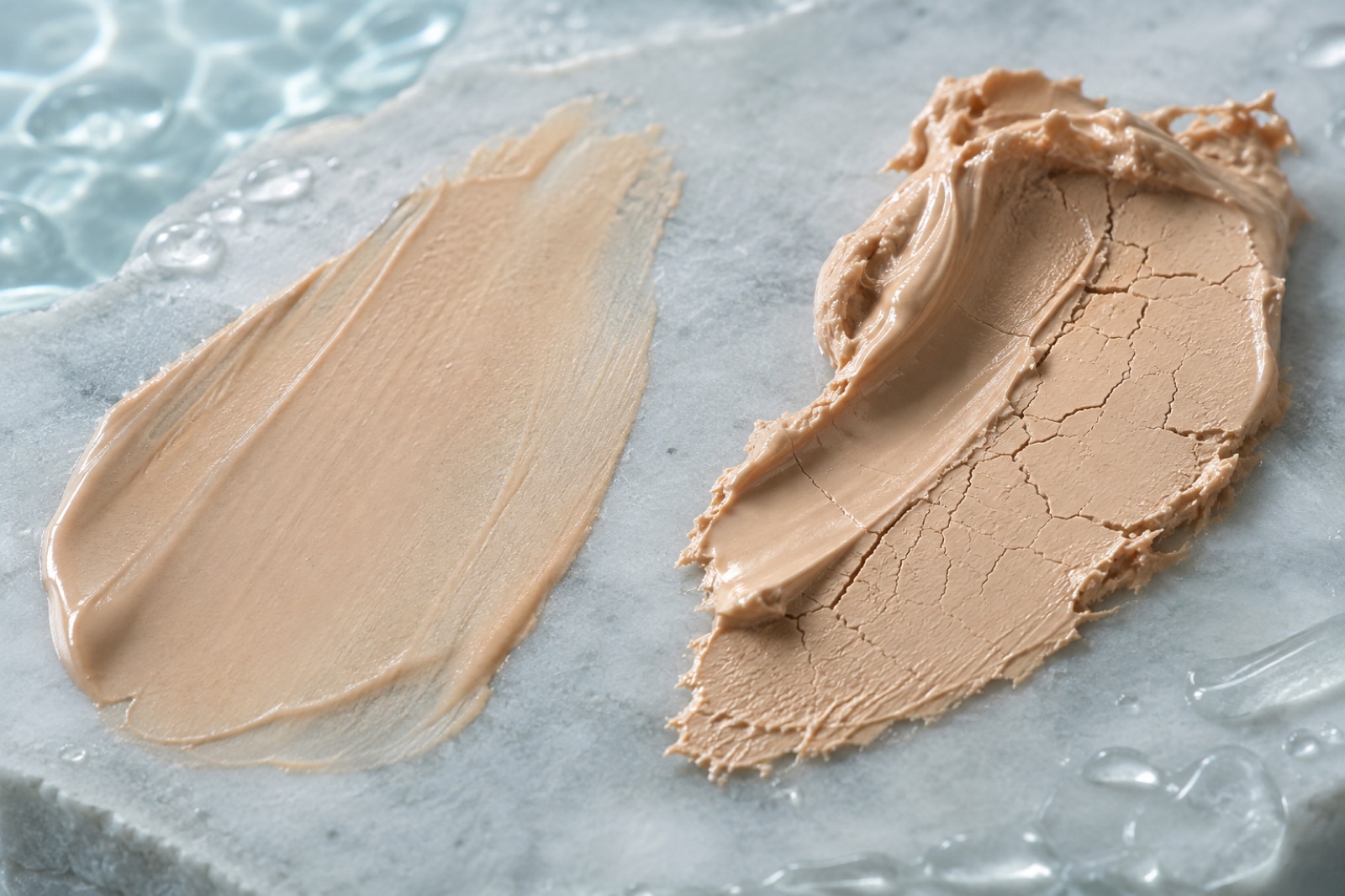
The basic plan has three steps: take off eye and lip makeup first, melt makeup off the whole face with a first cleanser, then do a second wash with your regular cleanser. The KDCA says a double cleanse helps on days you wear sunscreen or makeup, because follicles can get clogged.
Cut back on rubbing before you worry about cleansing power. In a 2021 study, 35 women with sensitive facial skin switched for 4 weeks to a cleansing oil that needs less rubbing, and their dryness, flaking, and redness dropped significantly, along with lower transepidermal water loss (TEWL). It had no control group and tested one specific product, so it cannot be applied directly, but on nights you get home late from work or a dinner out, it is better to relax your hands and give yourself plenty of rinsing time.
Why does makeup make my skin break out?
It is easy to feel that makeup made your skin worse when thick layering, touching your face during the day, and scrubbing hard at night pile up, more than because of any one product. The Korean Dermatological Association lists very oily or pore-clogging cosmetics together with friction as things that make acne worse.
So when you are trying to find the cause, it is faster to split your day into checkpoints and log them before you switch products. There are also reports like the 2012 study, where quality-of-life scores improved over a month after people properly learned camouflage makeup, so rather than giving up makeup entirely, first find the stage where the problem starts.
Breakout-day makeup log
| Checkpoint | What to do | What to write down |
|---|---|---|
| Morning check | Count new and pus-filled spots, decide how much to cover | Count, any pus or pain, name of today’s base |
| Before you leave | Base once, press product onto spots you cover | Number of spots with concealer, tools used |
| Afternoon | Blot with oil-absorbing paper, one reapply at most | Number of touch-ups, times you touched your face, mask or workout |
| After you get home | Eyes and lips first → first cleanser → second wash | Time you took it off, how much you rubbed (light, medium, hard), stinging |
| Next morning | Compare yesterday’s covered spots with new ones | Change in size, red rim, number of new spots |
| Day 3 | Decide whether to keep using the same products | Keep going / drop one item / book a visit |
Taking one photo of the covered spots in the same light each day makes the day 3 decision easier. When you change products, change only one at a time so your notes do not get mixed up.
When should a dermatologist see the spots you are covering?
- If a covered spot stays swollen and sore for more than three days or fills with pus, see a dermatologist before you rework your makeup.
- If new breakouts keep coming up in the same place even after you take a break from makeup and change how you remove it, talk with a dermatologist.
- If the area where you applied a cosmetic gets itchy and the redness spreads, stop that product and have a dermatologist check it.
Where the evidence comes from
- In a 2005 study (PMID 16048760), 18 women with acne learned how to use acne-oriented makeup and wore it for 2–4 weeks; lesion counts did not rise, and quality-of-life scores improved (no control group).
- In a 2012 study that taught camouflage makeup to 86 people with facial skin conditions (PMID 22759904), quality of life (DLQI) improved significantly among the 63 (73%) who responded a month later.
- In a 2017 survey answered by 334 Italian dermatologists (PMID 27284779), opinions were roughly split on allowing camouflage makeup for acne patients.
Frequently asked questions
Why does makeup make my skin break out?
The Korean Dermatological Association lists very oily or pore-clogging cosmetics and mechanical irritation such as rubbing among the things that make acne worse. More often than a single product, it is the combination of building thick layers, touching your face all day, and scrubbing hard to take it off at night. Splitting your day into stages in a log helps narrow down where the problem starts.
Can you put makeup on pimples with pus?
The sources behind this article include no study of wearing makeup over pus-filled spots for long periods, so there is no firm yes or no. The rule is to use the least coverage on those spots and never to press them with a tool or squeeze them with your fingers. If they swell and hurt, or pus spreads to several spots, think about a dermatology visit before your makeup technique.
What order do you remove a full face of makeup in?
Take off color on the eyes and lips separately first, then melt makeup off your whole face with a first cleanser you do not rub in, and follow with a second wash using your regular cleanser. Korea's national health agency (KDCA) says a double cleanse helps on days you wear sunscreen or makeup. Pat dry with a towel instead of rubbing.
Sources
- Makeup use and quality of life in female acne patients, 18 women, 2–4 weeks, 2005 (PMID 16048760)B
- Quality of life after medical camouflage makeup training, 86 participants, 1 month, 2012 (PMID 22759904)B
- Italian dermatologists' views on camouflage makeup for female acne patients: survey, 334 respondents, 2017 (PMID 27284779)B
- Rubbing during makeup removal and facial skin condition, 35 women, 4 weeks, 2021 (PMID 33040474)B
- Korea Disease Control and Prevention Agency (KDCA), National Health Information Portal — Acne (Korean)Institutional
- Korean Dermatological Association — Acne vulgaris (Korean)Institutional
Videos and forum posts never count as evidence for a fact here. Full rules: Editorial policy