Pimple on Lip Keeps Coming Back? Swap Lip Products, Track Habits
If a pimple on your lip keeps coming back, change your lip products and toothpaste one at a time, and count how often you pick or lick your lips for 2 weeks to narrow down the cause.

What this note covers8 sections
- If a lip bump keeps coming back in the same spot, what should you change first?
- What should you check on the ingredient list when you switch lip balms?
- How do you log habits like picking or licking your lips?
- If it started as a blister, how is it different from a pimple?
- Why would your lips be itchy and dry with pimples showing up too?
- Two-week swap and habit log for around the lips
- When should a dermatologist look at your lips?
- The studies behind this guide
| Item | Detail | Basis |
|---|---|---|
| Which product to change first | In a review of 47 reports (58 people) of reactions to lip care cosmetics, the most common culprit ingredients were castor oil, benzophenone-3, gallates, waxes and colophony, in that order | 2024 PMID 37904533 · A |
| Fragranced products | In a study of 75 people with cosmetic allergies, the most common culprit ingredient was fragrance (45.1%) | 1987 PMID 3652687 · B |
| Who it’s common in | In a meta-analysis of 20,107 people in the general population, contact allergy was 20.1%: 27.9% in women and 13.2% in men | 2019 PMID 30370565 · A |
| Logging habits | Habits of biting the lips or sucking them with the tongue are mentioned in connection with peeling cheilitis | Korean Dermatological Association · society |
| Blister signal | Lip herpes forms blisters where the lip meets the skin, with pain, itching or burning coming first | KDCA · agency |
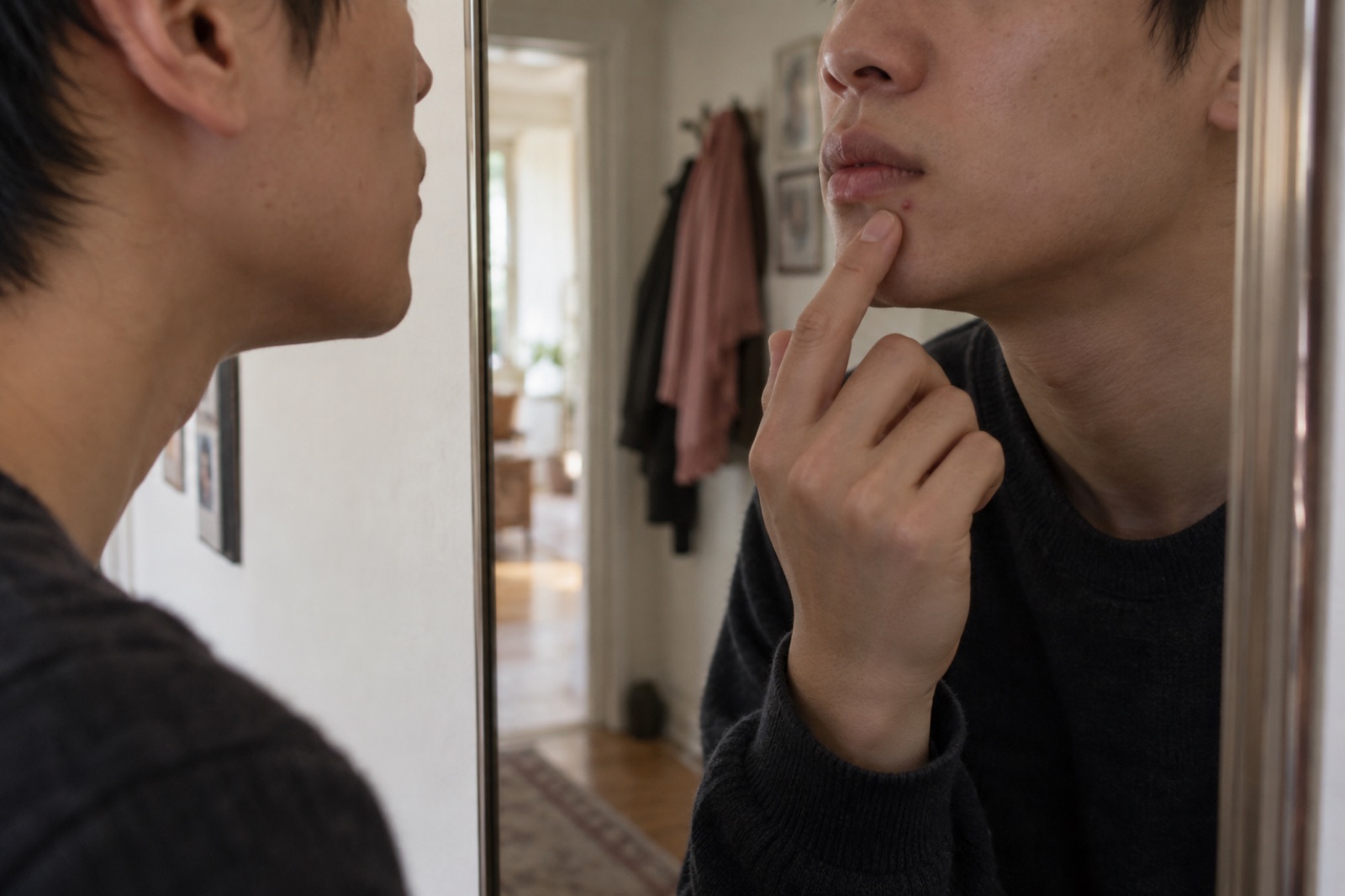
If a lip bump keeps coming back in the same spot, what should you change first?
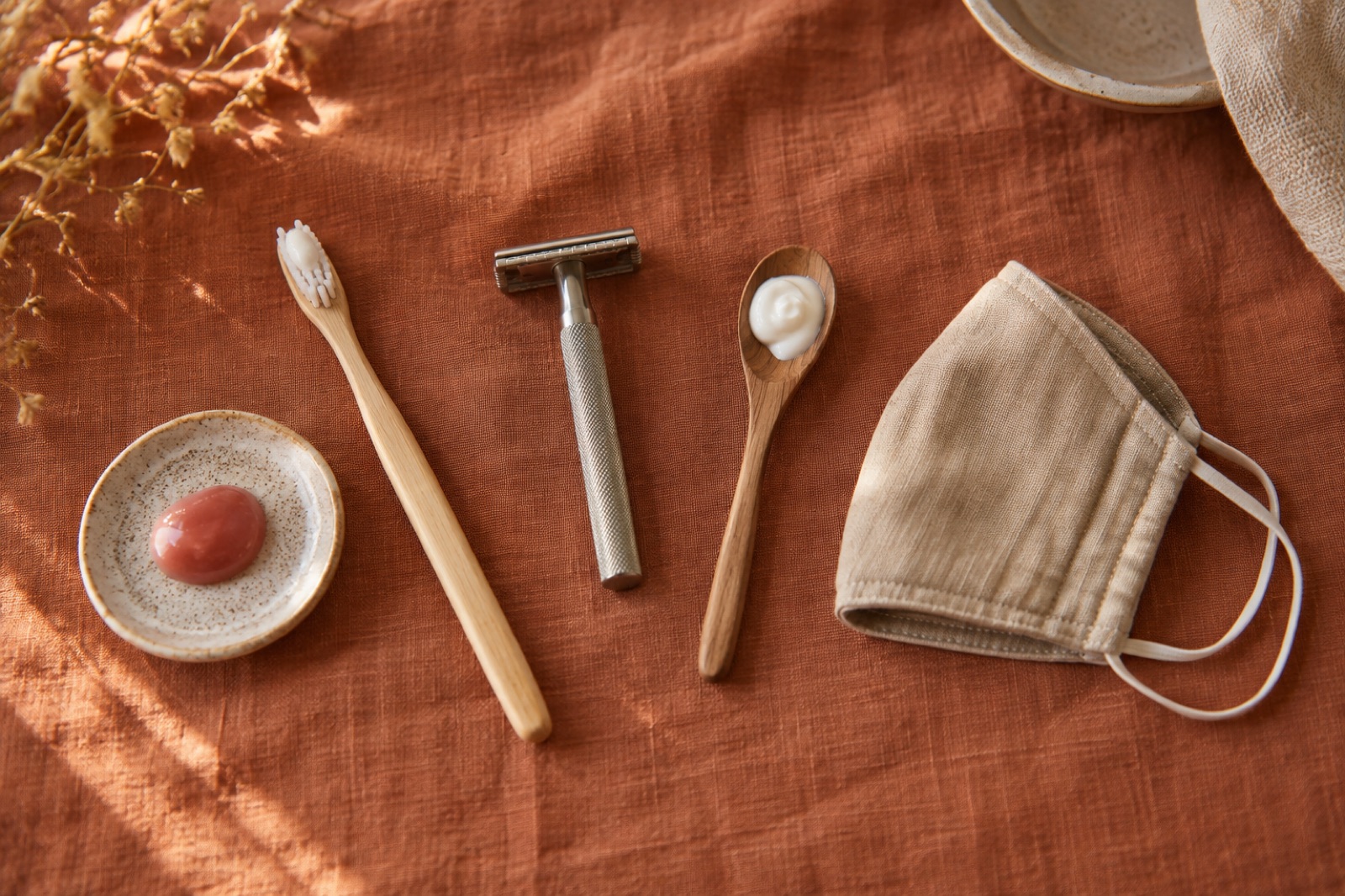
Start by picking just one thing that touches your lips every day — lip balm, lipstick or toothpaste — and stopping it first. The Korean Dermatological Association explains that more than half of contact cheilitis, caused by substances that touch the lips, is thought to come from lipstick or lip balm, and it also lists toothpaste, dental materials, nail polish and foods like mango as causes.
If you change several things at once, you can’t tell what made the difference. First make a list by time of day — the tint you put on before work, the lip balm before bed, toothpaste morning and night — then stop one each week, starting with whatever you bought most recently or anything with fragrance.
What should you check on the ingredient list when you switch lip balms?
Note where castor oil, benzophenone-3, gallates, waxes, colophony and fragrance sit in the full ingredient list so you can compare before and after the switch. A 2024 systematic review reported many lip products as causes — lipstick, lip balm, lip gloss, lip liner, lip plumper and more — and summarized these ingredients as the most common culprits.
That review pooled case reports, though, so it can’t tell you what percentage of people using a lip balm with these ingredients will react. The 1987 study (75 people) in which fragrance made up 45.1% of the culprits is also old data. Use ingredient names only as a “suspect list,” and confirm the real cause by what changes when you stop a product and by patch testing.
How do you log habits like picking or licking your lips?
Roughly count how many times a day you peeled skin off your lips, bit them or licked them, and write the situation next to it. The Korean Dermatological Association says a link to habits of biting the lips or sucking them with the tongue is mentioned for peeling cheilitis, and that cold, dry seasons are thought to make it worse.
The moments your hands and tongue go to your lips differ for everyone: working through practice problems before a test, staring at a screen in a meeting, walking into winter wind. Watching for 2 weeks whether high-count days line up with days new bumps appear lets you gauge whether to work on the habit before the products.
If it started as a blister, how is it different from a pimple?
If clear blisters come up in a cluster where the lip meets the skin and a tingling feeling came first, it’s not something to test by switching products; it’s something to have checked. Korea’s KDCA explains that with lip herpes, pain, itching or burning shows up before blisters form, that it can also appear on the nose, chin and cheeks, and that it settles without scarring within 6 to 10 days.
The same source says it tends to show up as blisters around the mouth when you have a cold or are run down, and that it can spread through contact with the sores. So in your log, keep “bumps with a white top” and “clusters of clear blisters” in separate columns, and stop the swap test if anything goes in the blister column.
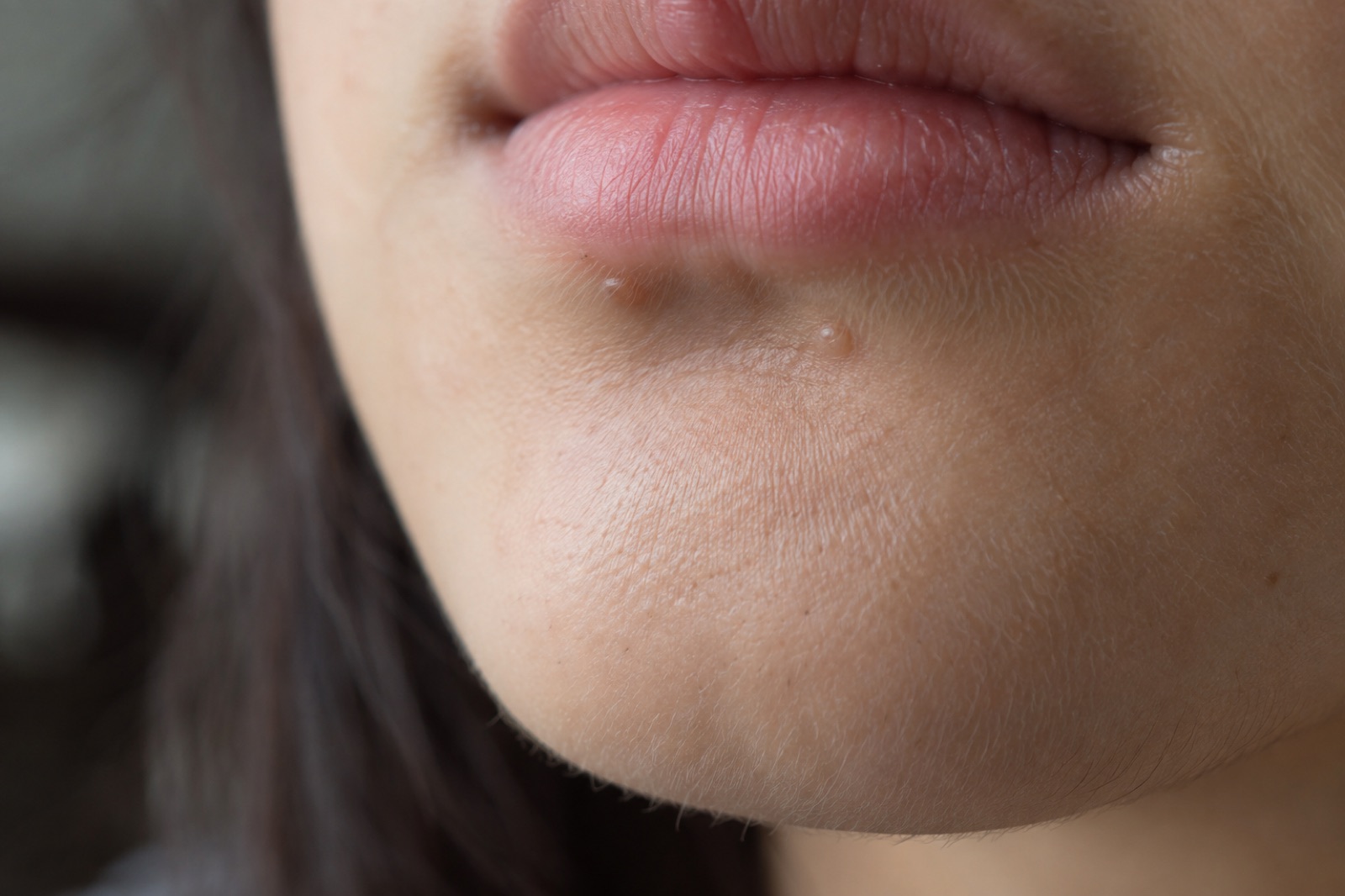
Why would your lips be itchy and dry with pimples showing up too?
If itching, dryness and cracking come together, suspect a reaction to a product that touched your lips first. The Korean Dermatological Association lists itching, dryness, cracking, swelling, crusting and cracks at the corners of the mouth as features of contact cheilitis, and notes that 90% or more of patients are women.
Contact allergy isn’t rare. In a 2019 meta-analysis pooling 28 studies and 20,107 people, 20.1% of the general population tested positive to at least one common allergen, and fragrance mix I ranked near the top at 3.5%. For the order in which to cut back products when breakouts keep returning all around your mouth, continue with breakouts around the mouth: which products to cut back over 2 weeks.
Two-week swap and habit log for around the lips
| Date | What you changed (lip balm, lipstick, toothpaste) | Times picked, bitten or licked | Itching, dryness, cracking | Bump type | Situation that day |
|---|---|---|---|---|---|
| Day 1 | e.g., stopped fragranced lip balm | e.g., around 10 | Yes / no | White top / red bump / clear blisters | e.g., night before an exam |
| Day 3 | |||||
| Day 7 | Sum up week 1 changes | ||||
| Day 8 | e.g., switched toothpaste | ||||
| Day 10 | |||||
| Day 14 | Pick 1 product to bring back |
If anything goes in the blister column even once, stop filling in the chart and get it checked. Photos need to be taken at the same window at the same time of day so you can compare dates.
When should a dermatologist look at your lips?
- If clear blisters cluster where the lip meets the skin, or tingling or burning came first, don’t squeeze or pick; get it checked.
- If itching, cracking or swelling continues 2 weeks after stopping lip products, ask a dermatologist about patch testing.
- If the corners of your mouth crack and get raw, or crusts keep coming back, see a dermatologist.
- If the swelling on your lip spreads, feels hot or hurts, don’t wait on your log; get care.
The studies behind this guide
- A 2024 systematic review of 47 reports (58 people) of reactions to lip care cosmetics (PMID 37904533) listed castor oil, benzophenone-3, gallates, waxes and colophony as the most common culprit ingredients.
- In a 1987 study of 75 people with cosmetic allergies (PMID 3652687), the most common culprit ingredient was fragrance, at 45.1%.
- In a 2019 meta-analysis of 20,107 people in the general population (PMID 30370565), contact allergy prevalence was 20.1%, higher in women at 27.9% than in men at 13.2%.
Frequently asked questions
Why do I keep getting whiteheads under my lip?
A small bump with a white top may be a clogged pore, and the area under the lip is where lip balm spreads and toothpaste foam lands, so suspect those products first. A 2024 review of reactions to lip care cosmetics (47 reports, 58 people) also listed many types, including lip balm, lipstick and lip gloss, as causes. Change one at a time, and if clear blisters are clustered together, don't treat them as whiteheads; get them checked.
Can a pimple above your lip make your upper lip swell?
The area around a bump above the lip can turn red and puffy, but if the upper lip itself swells, itches or cracks, look at other causes too. The Korean Dermatological Association lists itching, dryness, cracking and swelling as symptoms of contact cheilitis, which comes from contact with things like lipstick or lip balm. If the swelling spreads or feels hot, don't squeeze; see a dermatologist.
Why are my lips itchy and dry with pimples popping up around them?
When itching and dryness come together, think first of a reaction to something that touches your lips. The Korean Dermatological Association says more than half of contact cheilitis cases are thought to come from lipstick or lip balm, and that 90% or more of patients are women. Stop your lip products one at a time, and if it continues, ask about patch testing to identify the substance.
Sources
- Systematic review of allergic reactions to lip care cosmetics, 47 reports and 58 patients, 2024 (PMID 37904533)A
- Causative ingredients of cosmetic contact allergy, 75 patients, 1987 (PMID 3652687)B
- Meta-analysis of contact allergy prevalence in the general population, 28 studies and 20,107 people, 2019 (PMID 30370565)A
- Korean Dermatological Association — Cheilitis (Korean)Institutional
- Korea Disease Control and Prevention Agency (KDCA) National Health Information Portal — Herpes simplex infection (Korean)Institutional
Videos and forum posts never count as evidence for a fact here. Full rules: Editorial policy