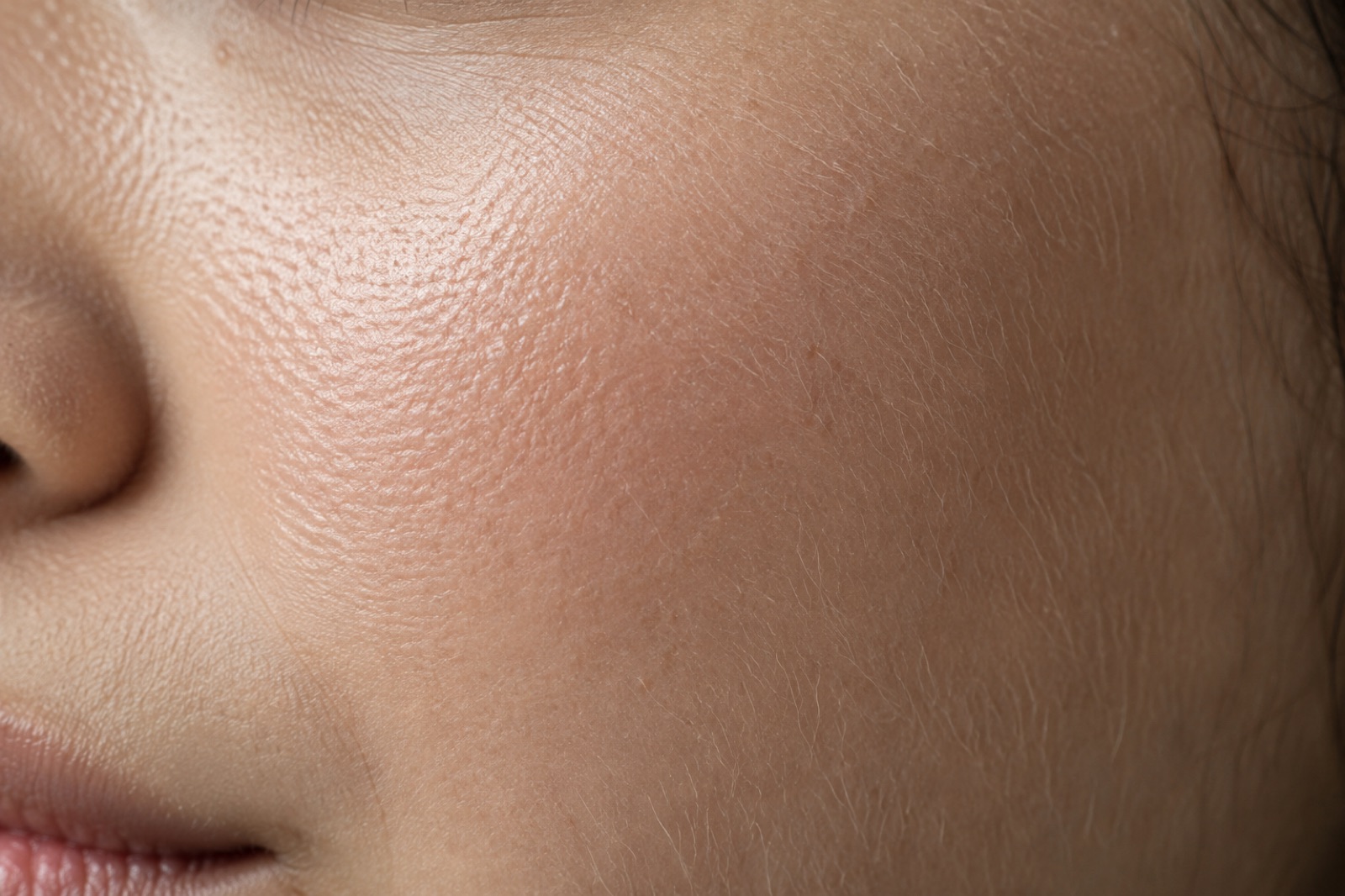
Folliculitis on Face? Daily Photos, Shaving Notes and Visit Prep
If you suspect folliculitis on your face, photograph it under the same conditions each day and log shaving, mask wearing and any ointments by date, then show that record at your dermatology visit.

What this note covers7 sections
- Can a photo tell you whether a bump on your face is folliculitis?
- How should you take photos so they can be compared?
- What should you log about shaving, masks and ointments?
- If it keeps coming back on your chin or around your mouth every time you shave, what do you change?
- Two-week log to bring to your appointment
- When is it time to get a dermatologist involved?
- A quick look at the evidence
| Item | Detail | Basis |
|---|---|---|
| Judging by looks | Of 39 studies that examined follicle conditions with confocal microscopy or OCT, 36 had a high or unclear risk of bias | 2023 PMID 37140216 · A |
| What it gets confused with | Acne needs to be told apart from folliculitis, rosacea and acneiform eruptions | Korean Dermatological Association · society |
| Reactions to hair | In biopsies of 28 women with follicle bumps after arm or leg waxing, 25% were a foreign-body reaction to hair, and 25% reported itching (not data on the face) | 2014 PMID 24134338 · B |
| Medicine history | In 46 people who took antibiotics long term for acne or rosacea, gram-negative bacteria such as Klebsiella and E. coli grew from pustules on the nose and face | 1999 PMID 10321942 · B |
| Marks | Of 262 acne patients, 87.2% had dark marks and 52.6% said they lasted a year or longer | 2019 PMID 30426810 · B |
Can a photo tell you whether a bump on your face is folliculitis?
Photos and looks alone can’t reliably separate folliculitis from acne, so use photos to show how things change over time, not to diagnose. In a 2023 systematic review of 39 studies that examined acne, rosacea and folliculitis with imaging devices such as confocal microscopy and OCT, 36 had a high or unclear risk of bias — even device-based results are still inconsistent.
The Korean Dermatological Association diagnoses acne by its mix of comedones, papules, pus bumps and nodules, but says it needs to be distinguished from folliculitis, rosacea and acneiform eruptions. So the job at home isn’t “guess what it is” but “record how it changed.” A few dated photos tell the exam room far more than a description from memory.
How should you take photos so they can be compared?
Before your morning wash, in natural light such as by a window, take three shots — front and 45 degrees to each side — and keep to the same time and place so they can be compared. Turn off filters and retouching, and put a ruler or coin next to the largest bump as a size reference.
The three photos from the first day are your baseline. After that, take one a day, and once things start to settle, cut back to one every three days. Making a separate album by date in your phone’s photo app makes it easy to flip through them in the exam room. Not pressing or squeezing bumps to check them for a photo is part of the log, too.
What should you log about shaving, masks and ointments?
For shaving, write down the date, the tool (disposable razor or electric shaver) and the day you changed the blade; for masks, how many hours and what type; for ointments and medicines, copy the name exactly as printed on the package and how long you used it. In a 1999 study of 46 people who had taken antibiotics long term for acne or rosacea, the bacteria grown from pustules on the nose and face were mostly gram-negative, such as Klebsiella and E. coli, so which medicine you used and for how long is a clue that helps sort out the cause at your appointment.
Korea’s KDCA explains that when shaving or similar damages the skin’s defenses, bacterial infections develop more easily. Among 102 people who went to a hospital for skin problems after beauty salon procedures (2020), acne-like rashes (25.4%), follicle problems after waxing (16.7%) and facial dark spots (14.7%) were all reported. That’s why hair removal and procedure dates belong in the log as well.
If it keeps coming back on your chin or around your mouth every time you shave, what do you change?
Change just one thing — your shaving tool or how often you replace the blade — and compare the same area with photos for 2 weeks. If you change several things at once, you can’t tell what made the difference, so write the date of the change in the first row of your log.
The sources behind this guide include no study comparing shaving methods for facial follicle bumps. But a 2014 study that biopsied follicle bumps in 28 women after they waxed their arms or legs found 25% were a foreign-body reaction to the hair itself, which is worth keeping in mind for bumps that recur where hair grows back. These data come from arm and leg waxing, so it is not known whether they apply to facial shaving. If they keep appearing in the same spot through 2 weeks of logging, show your shaving record at an appointment and find out the cause.
Two-week log to bring to your appointment
| Date | Photos (front, left, right) | Count and largest (mm) | Shaving (tool, blade change) | Hours in a mask | What you applied (ointment, medicine, cosmetic names) | Itch and pain (0–10) |
|---|---|---|---|---|---|---|
| e.g., Day first noticed | 3 | 4 bumps, 3 mm | Disposable razor, day 5 of use | 9 hours | None | Itch 3, pain 1 |
| Day 2 | 1 | |||||
| Day 4 | 1 | |||||
| Day 7 | 1 | Mark if you changed tools | ||||
| Day 14 | 3 | Appointment booked? |
At the visit, along with this log, mention ① the day it first appeared, ② whether something similar is anywhere else on your body, ③ any medicines you recently took or applied, and ④ whether anyone in your family has similar symptoms. Bringing the ointments and medicines in their packaging means you won’t get a name wrong.
When is it time to get a dermatologist involved?
- If the count rises during your 2-week log or bumps keep recurring in the same spot, take your log and photos to a dermatologist.
- If the area under your nose or around your mouth swells and hurts, or redness spreads widely and you have a fever, don’t wait; get care right away.
- If new pus bumps keep forming while you’re using an ointment or medicine, don’t switch on your own; bring what you’ve been using to the practice that prescribed it.
- If small blisters cluster along the lip line and a tingling feeling came first, it could be a different infection, so don’t touch it and have it checked.
A quick look at the evidence
- A 2023 systematic review of 39 studies that examined follicle conditions with confocal microscopy or OCT (PMID 37140216) found 36 had a high or unclear risk of bias, showing how hard these are to tell apart even with imaging devices.
- In a 1999 study of 46 people who took antibiotics long term for acne or rosacea (PMID 10321942), the bacteria grown from pustules on the nose and face were mostly gram-negative.
- In a 2019 survey of 262 acne patients (PMID 30426810), 87.2% had dark marks and 69.0% had picked or squeezed their lesions.
Frequently asked questions
I have a bump beside my nose. Is it folliculitis?
It's hard to decide from photos or looks alone. The Korean Dermatological Association says acne needs to be distinguished from folliculitis, rosacea and acneiform eruptions, and a 2023 review of 39 studies that used imaging devices to examine follicle conditions found most of them were of low quality. Take photos under the same conditions from the first day you notice it and show them to a dermatologist.
Why does folliculitis keep coming back around my mouth and chin every time I shave?
Korea's KDCA explains that when shaving or similar damages the skin's defenses, bacterial infections such as boils develop more easily. In a 2014 study that biopsied follicle bumps in 28 women after they waxed their arms or legs, 25% were a foreign-body reaction to the hair itself (not data on facial shaving). Change just one thing, your shaving tool or how often you replace the blade, and log it for 2 weeks; if it continues, get the cause checked at an appointment.
How do you handle dark marks left after folliculitis under the nose?
The sources behind this guide include no study that looked only at marks left after follicle bumps under the nose. In a 2019 survey of 262 acne patients, 69.0% picked or squeezed their lesions, 87.2% had dark marks, and 52.6% said the marks lasted a year or longer. Keep your hands off, take a photo under the same conditions once a month, and see a dermatologist if the marks stay dark for a long time.
Sources
- Systematic review of confocal microscopy and OCT imaging in inflammatory follicular skin diseases, 39 studies, 2023 (PMID 37140216)A
- Skin conditions after beauty salon procedures, prospective observation of 102 patients, 2020 (PMID 33911422)B
- Clinicopathologic evaluation of post-waxing folliculitis, 28 patients, 2014 (PMID 24134338)B
- Gram-negative folliculitis in acne and rosacea patients on long-term antibiotics, 46 patients, 1999 (PMID 10321942)B
- Survey of acne-related post-inflammatory hyperpigmentation in the Middle East, 262 patients, 2019 (PMID 30426810)B
- Korean Dermatological Association — Acne vulgaris (Korean)Institutional
- Korea Disease Control and Prevention Agency (KDCA) National Health Information Portal — Cellulitis and boils (Korean)Institutional
Videos and forum posts never count as evidence for a fact here. Full rules: Editorial policy