Acne Severity: Count Your Spots at the Mirror and Log Each Week
Count acne in four groups — comedones, red bumps, pus bumps and nodules — and write each number down. Separate counts make it easier to decide what to watch at home and when to see a dermatologist.

What this note covers7 sections
- How many groups should you sort acne into when counting?
- At what count should you think about seeing a doctor?
- How do you pick the counting day and lighting?
- How does your log help at a dermatology appointment?
- Weekly acne count log
- When is it time to book a dermatology visit?
- Where these numbers come from
| Log item | How to count it | Basis |
|---|---|---|
| Red and pus bumps (inflamed) | 34 or fewer with 2 or fewer nodules is classed as mild to moderate | 2024 PMID 39305432 · A |
| Nodules | 3 or more, or 35 or more inflamed lesions, is moderate to severe | 2024 PMID 39305432 · A |
| Comedones | The main lesion in mild acne; closed comedones come before inflamed lesions | Korean Dermatological Association, acne vulgaris · society |
| How long it lasts | Continues in about 64% of people in their 20s and about 43% in their 30s | 2013 PMID 23210645 · A |
| When to reassess | If it’s unchanged after 6 to 8 weeks of steady care under a doctor, the approach changes | KDCA Acne · agency |
How many groups should you sort acne into when counting?
Four columns are enough: comedones, red bumps, pus bumps and nodules. The National Health Information Portal, run by the Korea Disease Control and Prevention Agency (KDCA), sorts these lesions into non-inflamed, inflamed and scars, and explains that most people have several forms mixed together rather than just one.
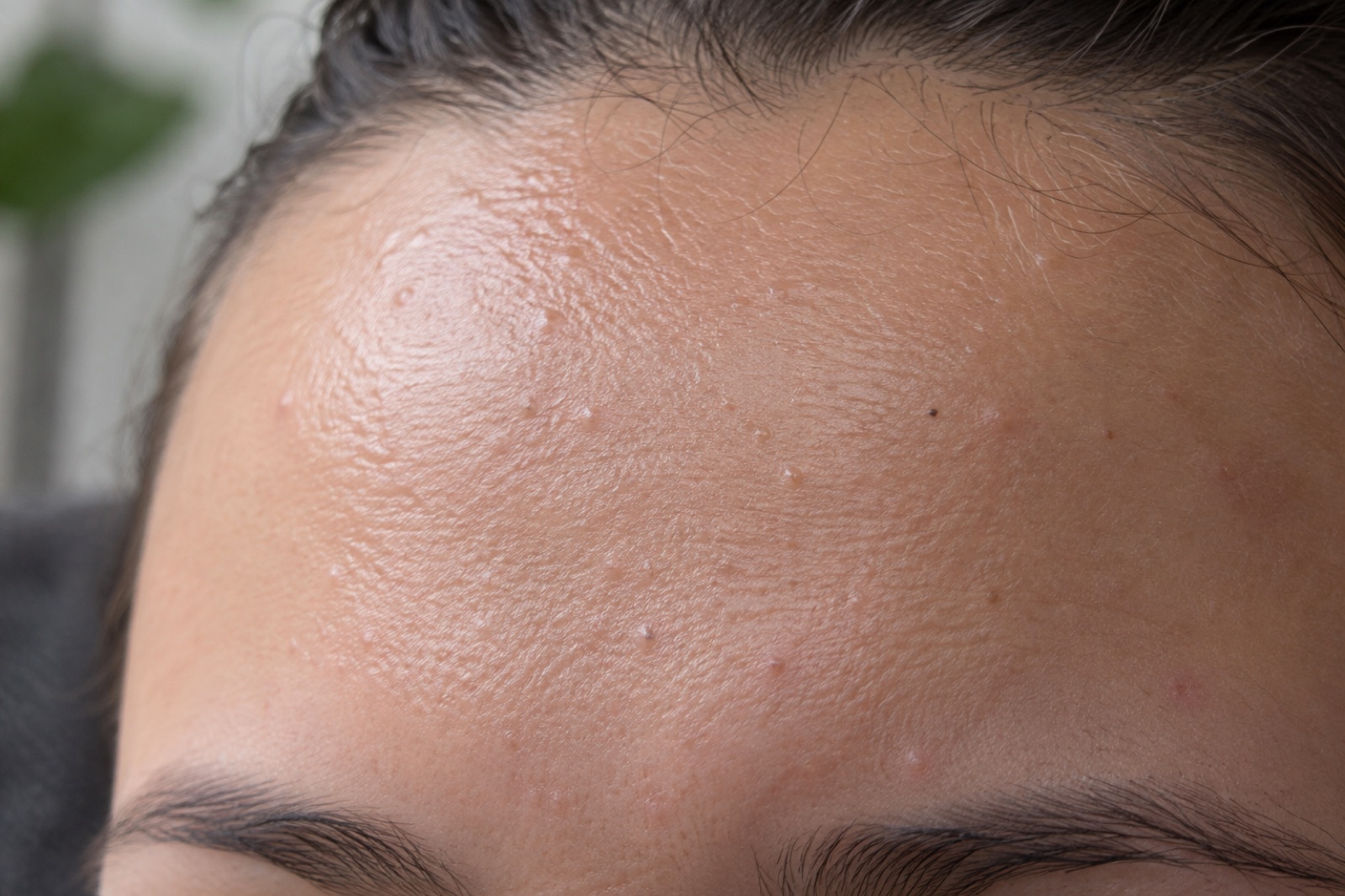
You sort them by eye and by fingertip. Small grains with no redness are comedones. Firm and red means a red bump. A yellowish spot of pus in the center means a pus bump. Anything that hurts deep down when pressed and feels large is a nodule. A 2016 European expert consensus guide also groups acne into mostly comedones, mostly red and pus bumps, and nodules, with a different approach for each, so which column has the most is your clue to how far home care should go.
At what count should you think about seeing a doctor?
A 2024 expert panel report that summarized the UK’s NICE criteria classes 35 or more inflamed lesions, or 3 or more nodules, as moderate to severe. Even below that, if the nodule column has any number in it, look at depth before count.
The same report adds that count alone shouldn’t decide things; location, lesion size and the toll on daily life count too. Even with only a dozen or so red bumps, a job seeker who shrinks from the mirror every day before interviews has a reason to get advice. The Korean Dermatological Association explains that deep lesions such as pustules (pus bumps) and nodules can leave permanent scars after they close, so mark nodules separately in your log even when there are only one or two.
How do you pick the counting day and lighting?
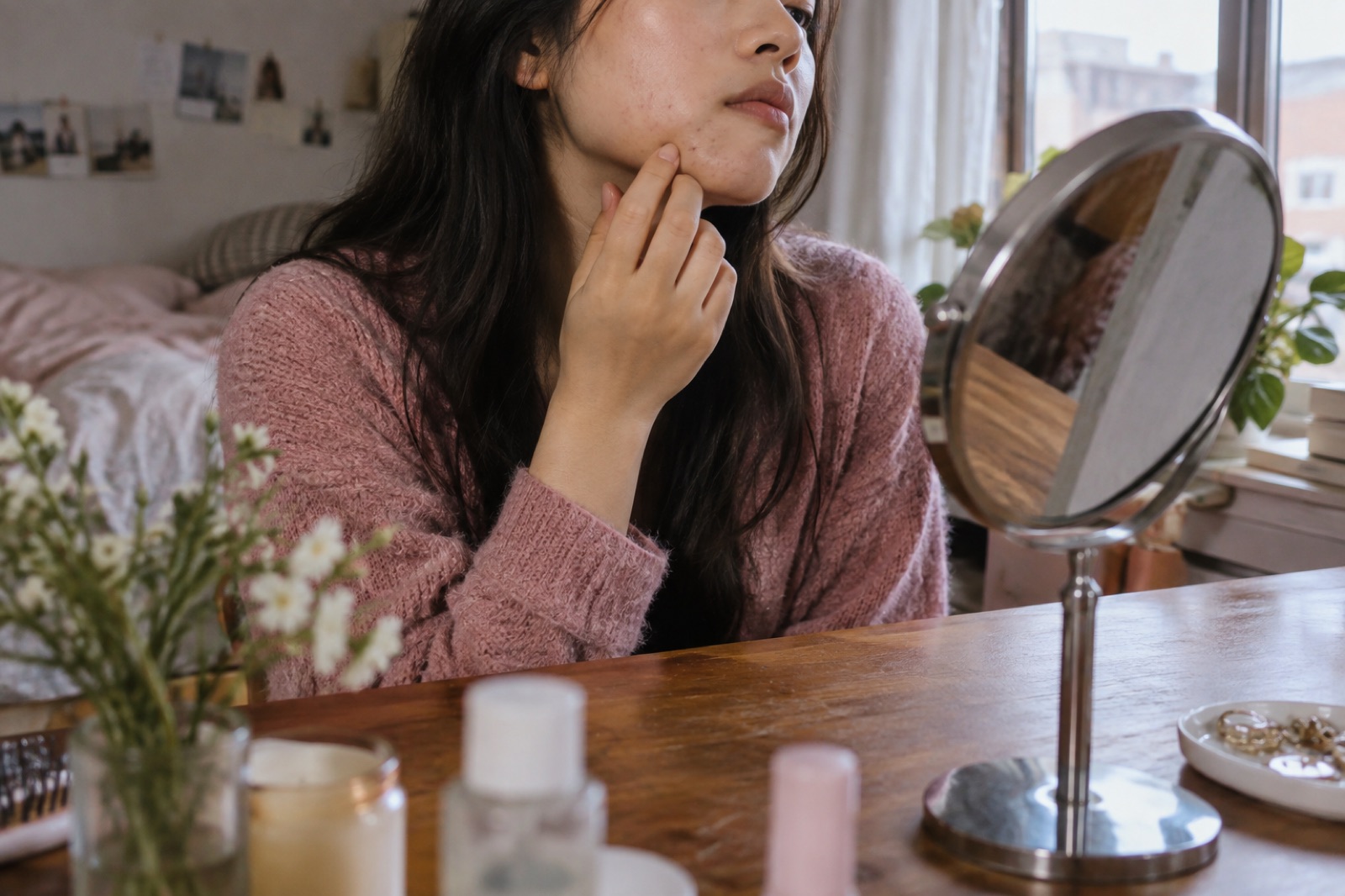
Count on the same day each week, 10 minutes after your evening wash, with the same mirror and the same light. Right after washing, water and redness make small grains hard to see, so waiting a moment makes the columns easier to sort.
Divide your face into four zones — forehead, right cheek, left cheek and chin — and count one zone at a time. If you have periods, note where in your cycle you counted. The Korean Dermatological Association says that with female patients, doctors check cosmetic use and how regular the cycle is, and this note answers that question. If you can’t choose your lighting, as in a college dorm, match conditions by shining your phone’s flashlight from the same angle each time.
How does your log help at a dermatology appointment?
In the exam room, column counts and notes describe your skin faster than “I’ve been breaking out a lot lately.” The KDCA advises telling the doctor which cosmetics and oral medicines you have been using, and, for women, checking whether it gets worse with the menstrual cycle.
Sorting out your skin care has value on its own, too. In a 2006 randomized trial that split 50 women with acne into two groups, the 25 who got skin care and makeup coaching saw their quality-of-life scores improve over 4 weeks, reaching into the psychological domain, with no difference in how their acne progressed compared with the group without coaching (grade A, based on the abstract). Both groups were also under a doctor’s care, so this isn’t a result of skin care alone.
Weekly acne count log
| Date | Comedones | Red bumps | Pus bumps | Nodules (deep and painful) | Notes (sleep, cycle, new products) |
|---|---|---|---|---|---|
| Week 1 (example) | 12 | 6 | 1 | 0 | Finals week, 5 hours of sleep |
| Week 2 | |||||
| Week 3 | |||||
| Week 4 | |||||
| Week 6 | |||||
| Week 8 |
Reading it takes two rules. If red bumps plus pus bumps add up to 35 or more, or the nodule column reaches 3 or more, take the log and book an appointment. Below that, check whether your 2-week totals are heading down, and if they are the same at week 8, ask a professional whether to change your routine.
When is it time to book a dermatology visit?
- If you have 3 or more nodules, or 35 or more red and pus bumps combined, see a dermatologist.
- Even one or two nodules deserve a visit before they scar if they are deep and painful.
- If your totals don’t drop over 6 to 8 weeks of logging, talk through a new plan with a board-certified dermatologist.
- For women with severe acne plus irregular periods or new coarse hair growth, ask at your appointment whether hormone testing is needed.
Where these numbers come from
- A 2024 UK acne expert panel report summarized the NICE criteria: 35 or more inflamed lesions or 3 or more nodules is moderate to severe, and 34 or fewer inflamed lesions with 2 or fewer nodules is mild to moderate.
- A 2013 systematic review of acne epidemiology found acne continues in about 64% of people in their 20s and about 43% in their 30s.
- In a 2006 randomized trial of 50 women with acne, the 25 who received skin care and makeup coaching improved in more quality-of-life areas after 4 weeks than those who did not.
Frequently asked questions
What are those tiny hard bumps that feel like grains under the skin?
Small, rough bumps you can feel but that aren't red are usually comedones. The Korean Dermatological Association describes skin-colored bumps with no visible opening as closed comedones and ones with a dark opening in the center as open comedones, and says closed comedones are worth watching because they come before inflamed lesions. In the log, count both in the comedone column.
How long does acne take to go away on its own?
It varies too much from person to person to name a timeline. The Korean Dermatological Association says acne starts to ease from the mid-20s, but a 2013 review of acne epidemiology found it continued in about 64% of people in their 20s and about 43% in their 30s. Korea's KDCA says untouched acne may settle after several years but can leave permanent scars, so if you have deep lesions, getting seen beats waiting.
What should you do about pimples that never form pus?
For red bumps without pus and for comedones, don't squeeze. Keep counting them and stay with a gentle routine. The KDCA advises washing twice a day with a mild cleanser, using non-comedogenic, low-irritation cosmetics, and keeping your hands off your face. If your counts don't drop over 6 to 8 weeks of logging, or deep, painful lumps show up, see a dermatologist.
Sources
- Evidence since the NICE acne guideline — UK acne expert panel, 2024 (PMID 39305432)A
- Consensus guide to acne approaches by lesion type, 2016 (PMID 27177989)A
- Systematic review of acne epidemiology, 2013 (PMID 23210645)A
- RCT of skin care and makeup coaching and quality of life in women with acne, 2006 (PMID 17073988)A
- Korea Disease Control and Prevention Agency (KDCA) National Health Information Portal — Acne (Korean, updated 2026-08-03)Institutional
- Korean Dermatological Association — Acne vulgaris (Korean)Institutional
Videos and forum posts never count as evidence for a fact here. Full rules: Editorial policy
What to check when choosing a product for this routine
Check the criteria below before the product name. Each item can be found on the full ingredient list or in the product description.
| Item | What to look for | Why |
|---|---|---|
| Non-comedogenic label | Whether the description says the formula was evaluated as non-comedogenic | If the comedone column climbs during your counting weeks, it's easier to weigh the product as one of the variables |
| Oil content | A thin texture, without oils bunched near the top of the full ingredient list | Korea's KDCA advises choosing low-oil products for acne-prone skin |
| Start date | Whether an expiration date or period-after-opening mark is printed, so you can write the opening date on the container | Noting in your log when you started it lets you line it up against changes in your counts |
| Irritation testing disclosed | Whether the brand says how irritation was tested | Reactions differ from person to person, but you can choose knowing under what conditions it was checked |
Product from this site's operator · KW Cosmetic Content Team
Revive Therapy N.F TonerCosmetics do not replace the diagnosis or treatment of a skin condition.