Acne Scar Cream? First Sort Your Scar Types and Prep for a Consult
Before you pick something to put on acne scars, write down each scar's shape and location, then take photos under the same conditions and bring them to a dermatology consult.

What this note covers6 sections
| What to sort out | Known fact | Basis |
|---|---|---|
| How common | In an analysis pooling 24,649 acne patients, 47% had scars, and the share rose with acne severity (mild 46%, moderate 67%, severe 82%) | 2023 meta-analysis · A |
| Do shapes mix? | Among 100 scar patients, 94% had ice pick scars, 86% rolling scars, and 54% boxcar scars, so several shapes overlapped in one person | 2020 cross-sectional study · B |
| Shape judged by eye | 8 scars classed as ice pick by eye looked like boxcar scars on ultrasound (out of 81) | 2013 · B |
| Similar-sounding names | Cica-Care is the product name of a silicone gel sheet for scars, while “cica” in cosmetics refers to the plant ingredient Centella asiatica | Editorial distinction |
What should you sort out before looking for an acne scar cream?
First, sort each spot into a sunken scar, a raised scar, or a flat mark with only color left. The Korean Dermatological Association, a professional society in Korea, says depressed or hypertrophic scars can remain after acne, and that deep spots like pustules (pus-filled bumps) or nodules can become permanent scars even after they settle down.
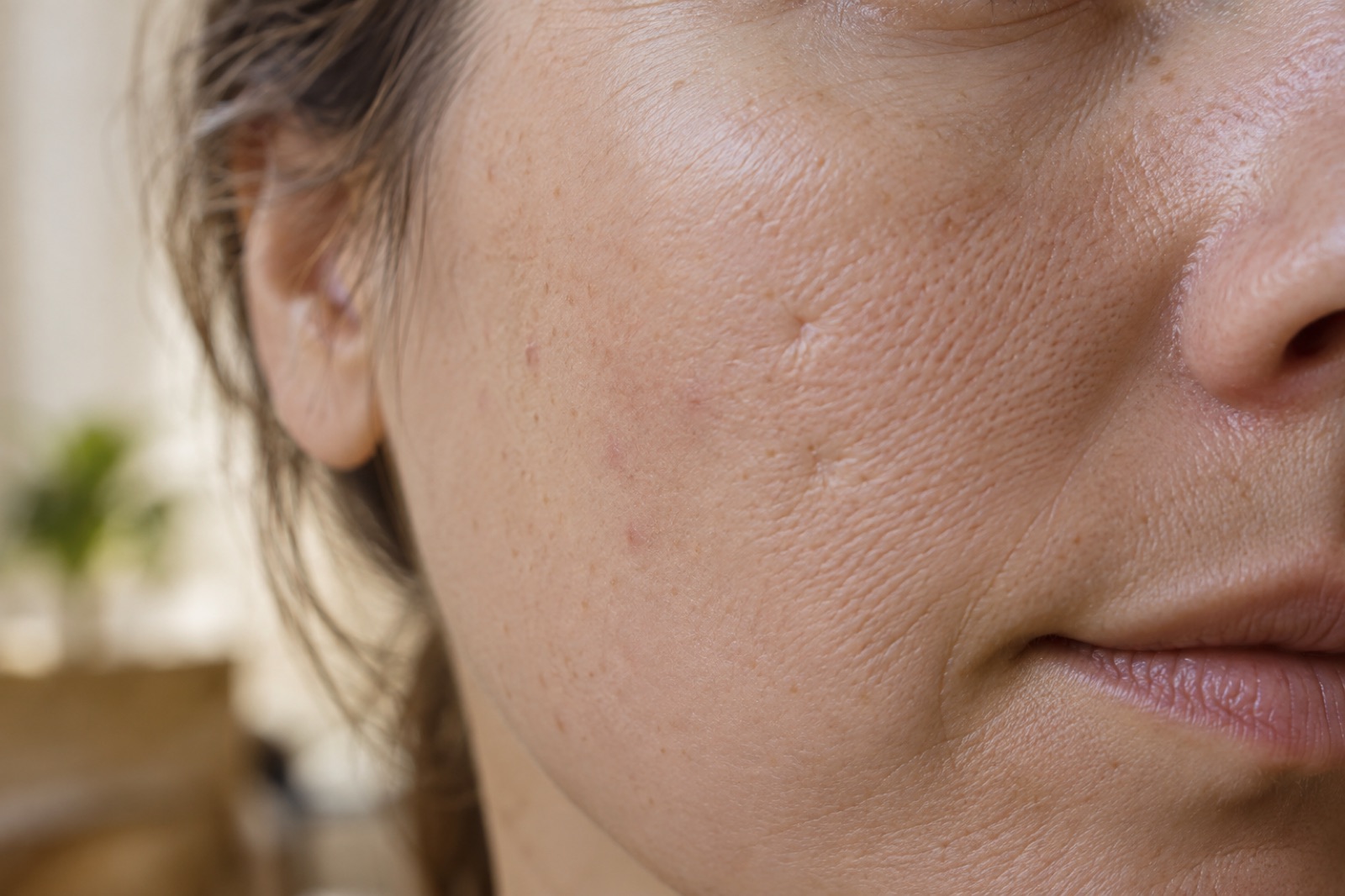
Even sunken scars rarely come in just one shape. In a 2020 study of 100 scar patients, ice pick, rolling, and boxcar scars often overlapped on the same face.
How reliable is sorting scar shapes at home?
Treat the shapes you sort at home as notes to open the consult. In a 2013 study that re-examined 81 acne scars with ultrasound, 8 scars that had been classed as ice pick by eye actually had a boxcar shape.
Depth also measured differently by shape. In a 2026 study that examined 49 scar samples from skin of color under the microscope, the average depth was 1933.4 µm for ice pick scars and 1327.88 µm for boxcar scars. That is why you should bring three photos, front and both sides, taken by the same window at the same distance.
What do you need to bring to the consult?
Bring your scar map, same-condition photos, and notes on when your acne started and your family history. In the meta-analysis, family history came with 2.73 times the odds of scarring, and in the 2020 study, 52 of 100 people did not start seeing a doctor until a year after their acne began.
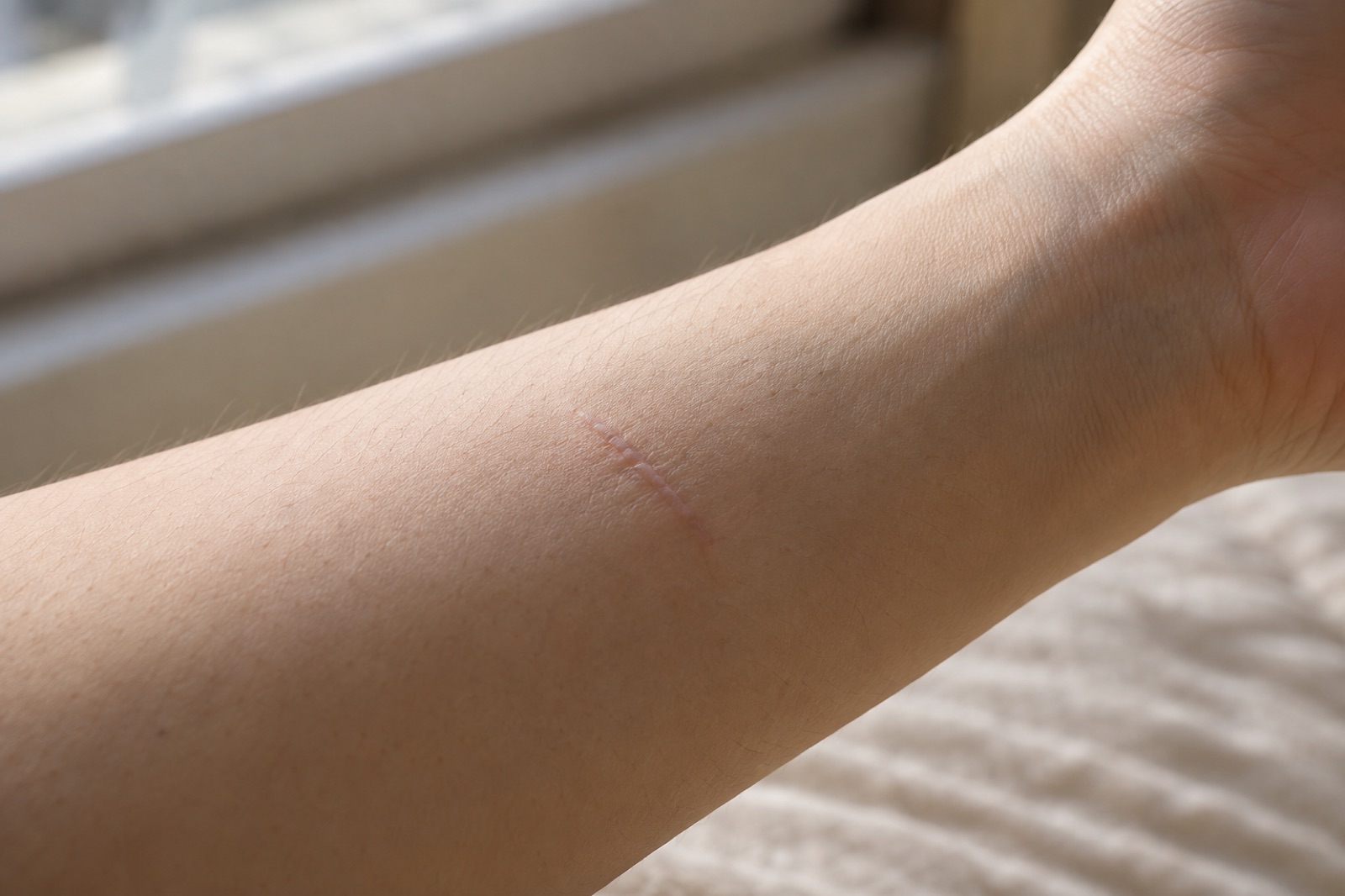
If you have raised scars, silicone gel sheets may come up, but the research on them mostly involved hypertrophic scars and keloids. They are not the same thing as Centella (cica) cosmetics with a similar name, so ask about them separately at the consult.
Acne scar map (consult prep sheet)
| Area | Shape you see | Count | Rough size | Color | Itching or pain | Photo number |
|---|---|---|---|---|---|---|
| Forehead | Sunken / raised / color only | Grain of rice / pea | Red / brown / white | Yes / no | ||
| Left cheek | ||||||
| Right cheek | ||||||
| Chin and mouth area | ||||||
| Back and chest | ||||||
| Also note | When your acne started · family history · medicines and cosmetics you use now · past procedures and when |
When is it time to book a dermatologist for your scars?
- If you can already see sunken or raised scars, get a dermatology consult before you choose anything to put on them.
- If deep, painful acne keeps coming up, see a doctor first, before more scars form.
- If a scar itches or keeps rising, take your photos to a dermatologist to have it checked.
Evidence behind this scar map
- A 2023 meta-analysis pooling 37 studies and 24,649 acne patients (PMID 37357642) found a scar prevalence of 47%, with male sex, family history, and acne severity as risk factors.
- A 2020 study of 100 acne scar patients (PMID 33208997) observed ice pick scars in 94%, rolling in 86%, and boxcar in 54%, and 52 people started care a year after onset.
- A 2025 review of 16 studies (481 people) of fractional radiofrequency microneedling alone (PMID 39781098) found the most common side effect was temporary redness lasting 7.8 days on average.
Frequently asked questions
What are white scars from acne?
The sources behind this article do not cover acne marks that look whiter than the skin around them on their own. The Korean Dermatological Association divides scars left after acne into depressed (sunken) scars and hypertrophic (raised) scars, and says color changes can last a year or longer. If you note whether the white spot is sunken, raised, or flat with only a color difference, it is easier to tell apart at your visit.
How many sessions do acne scars take, and is that set at a dermatology consult?
Yes. The number depends on the scar's shape and depth and the method chosen, so it is decided at the consult. The Korea Disease Control and Prevention Agency (KDCA) says chemical peels can be repeated several times at set intervals depending on scar depth. Study designs also differ: one microneedling study gave 14 people 6 sessions 2 weeks apart, and one fractional laser study gave 13 people 3 sessions, once a month.
Why do acne scars itch?
The sources behind this article do not explain why acne scars itch. However, a 2007 study that followed 60 people with raised hypertrophic scars or keloids for 6 months rated itching and pain separately, alongside color and height, which shows itching is treated as a symptom worth checking. If a scar itches and keeps rising, have a dermatologist look at it and bring your photos.
Sources
- Meta-analysis of scar prevalence and risk factors in acne patients, 37 studies and 24,649 people, 2023 (PMID 37357642)A
- Cross-sectional study of acne scar types and timing of care, 100 people, 2020 (PMID 33208997)B
- Clinical classification vs. ultrasound findings of acne scars, 41 people and 81 scars, 2013 (PMID 24118266)B
- Cross-sectional histology study of atrophic acne scar depth in skin of color, 49 samples, 2026 (PMID 40826840)B
- Systematic review of fractional radiofrequency microneedling alone, 16 studies and 481 people, 2025 (PMID 39781098)A
- Comparison of microneedling depths for atrophic acne scars, 14 people, 2024 (PMID 38159109)A
- RCT of fractional laser for atrophic acne scars, 13 people, 2012 (PMID 22766970)A
- Six-month comparative study of hypertrophic and keloid scars, 60 people, 2007 (PMID 17722521)B
- Korea Disease Control and Prevention Agency, National Health Information Portal — Acne (Korean)Institutional
- Korean Dermatological Association — Acne vulgaris (Korean)Institutional
Videos and forum posts never count as evidence for a fact here. Full rules: Editorial policy