Acne Cream, First 2 Weeks: Logging Amount, Area, and Stinging
Use the amount and area your pharmacist, doctor, or package directions give for an acne cream, and for the first 2 weeks write down stinging, flaking, and any new small bumps every day.

What this note covers7 sections
- How much acne cream do you use, and over how much skin?
- What should you do about stinging or flaking in the first 2 weeks?
- What are the drawbacks of acne creams?
- What if you get more small bumps after starting?
- Acne cream log: first 2 weeks
- When should you call your pharmacist or book a dermatologist?
- Evidence behind this log
| What to watch in weeks 1–2 | Detail | Basis |
|---|---|---|
| Before you start | Have a doctor explain the correct way to use it and its side effects | Korea Disease Control and Prevention Agency (KDCA) · institution |
| Frequent reactions | Some topical medicines can cause dryness and irritation | Korean Dermatological Association · institution |
| While using it | Avoid frequent soap washing and scrubbing off flakes; use a moisturizer after washing | KDCA · institution |
| When people felt a difference | Better tolerance on the side with a moisturizing lotion was reported at every visit over 4 weeks; the difference in participants’ ratings was statistically significant in the first 2 weeks (30 people) | 2013 PMID 22384983 · A |
How much acne cream do you use, and over how much skin?
The leaflet and the directions from your pharmacist or doctor set the amount and area, and you do not increase them on your own. In the US, some acne creams and gels are sold over the counter and others need a prescription, so the directions may come from the package label or from your prescriber. Whether you were told to dot it on spots or spread it over the whole area, copy those words into the day 1 row.
What should you do about stinging or flaking in the first 2 weeks?
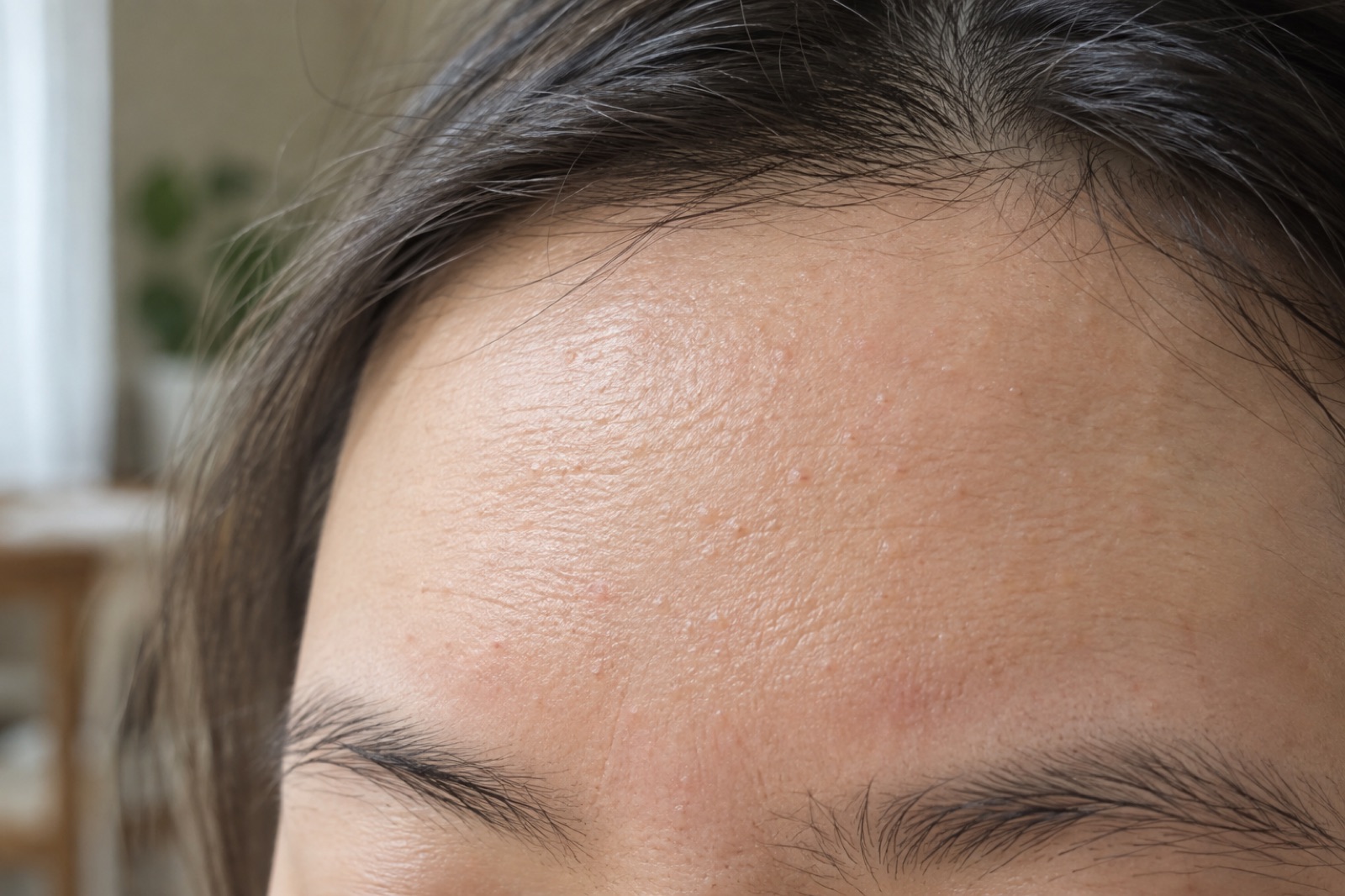
Score them 0 to 3 each day so you can see the trend. In a 2013 split-face study of 30 healthy people, the irritation score on the side that used a prescription topical gel plus a moisturizing lotion was 0.43, lower than 0.59 on the gel-only side.
What are the drawbacks of acne creams?
Dryness, flaking, and stinging, plus the time it takes to see results. The KDCA says that if there is no improvement after 6 to 8 weeks of steady use under a doctor’s care, the approach is changed.
What if you get more small bumps after starting?
No study has looked directly at creams and small bumps. Medicines can also cause rashes, so record how many new bumps you have and where, and show that record.

Acne cream log: first 2 weeks
| Date | Time applied | Method you were told (spots or whole area) | Amount, in the words you were given | Stinging (0–3) | Flaking (0–3) | New bumps: count and location | Moisturizer |
|---|---|---|---|---|---|---|---|
| Day 1 | Exactly as you were told | Exactly as the leaflet says | Used / not used | ||||
| Day 2 | |||||||
| Day 3 | |||||||
| Day 5 | Times you washed your face | ||||||
| Day 7 | Forehead / cheeks / chin | Days skipped | |||||
| Day 10 | |||||||
| Day 14 | Continuing / changed / stopped | Average | Average | Total | Questions for your pharmacist or doctor |
When should you call your pharmacist or book a dermatologist?
- If stinging stays at 2 or higher for more than three days, or the area swells or oozes, stop using it right away and talk to a pharmacist or the clinic that prescribed it.
- If new small bumps keep increasing over the 2 weeks, take your log to a dermatologist visit.
- If swollen, painful lumps form or the breakouts spread widely to your back or chest, consider seeing a dermatologist.
- If a prescribed cream shows no improvement after 6 to 8 weeks of steady use, work out a new plan at your follow-up visit.
Evidence behind this log
- In a 2013 split-face study of 30 healthy volunteers (PMID 22384983), the overall irritation score on the side using a prescription topical gel plus a moisturizing lotion was 0.43, lower than 0.59 on the gel-only side (p=0.032).
- In a 2010 trial comparing 247 acne patients over 12 weeks (PMID 20677537), irritation scores were similar between the group that used two prescription topicals together in the morning and the group that split them between morning and evening.
- A 2020 Cochrane review (PMID 33034949, 49 RCTs, 3,880 people) found that the side effects of the six topical ingredients this review covered were all mild and temporary.
Frequently asked questions
How much acne cream should you use, and how?
The amount and method differ from one medicine to another, so the leaflet and what your pharmacist or doctor tells you are the standard. The Korea Disease Control and Prevention Agency (KDCA) advises having a doctor explain the correct way to use it and its side effects before you start. Write down exactly what you were told, dot it on spots or spread it thinly over the whole area, in the first row of your log so you do not mix it up.
What are the downsides of acne creams?
The common ones are dryness, flaking, and stinging, plus the time it takes to see results. The Korean Dermatological Association says some topical medicines can cause dryness and irritation, so care is needed. A 2020 Cochrane review (49 trials, 3,880 people) found that the side effects of the six topical ingredients this review covered were all mild and temporary.
Can acne cream cause more small bumps?
The sources behind this article include no study that looked directly at whether a cream increases small bumps. The KDCA notes that cosmetics or medicines can cause acne-like rashes, so write down how many new bumps appeared and where, and show that to your pharmacist or the clinic that prescribed the cream.
Sources
- Korean Dermatological Association — Acne vulgaris (Korean)Institutional
- Korea Disease Control and Prevention Agency, National Health Information Portal — Acne (Korean)Institutional
- Split-face tolerability of a prescription topical gel with vs. without a moisturizing lotion, 30 people, 2013 (PMID 22384983)A
- 12-week comparison of prescription topical gels with and without a moisturizing base, 20 people, 2009 (PMID 19537284)A
- RCT comparing application timing of two prescription topicals, 247 people, 2010 (PMID 20677537)A
- Cochrane review comparing topical acne ingredients, 49 RCTs and 3,880 people, 2020 (PMID 33034949)A
Videos and forum posts never count as evidence for a fact here. Full rules: Editorial policy