Dehydrated Oily Skin? Log Tightness and Shine at 3 Times of Day
Dehydrated oily skin is shine and tightness showing up together, and you can sort it out by jotting down how your skin feels right after washing, at lunch, and in the evening.
What this note covers8 sections
- How can you tell if your skin is dehydrated or oily?
- What do you check right after washing, at lunch, and in the evening?
- Why is my skin still dry after applying lotion?
- How many thin layers should you apply?
- What should I do about closed comedones on dehydrated oily skin?
- Three-times-a-day log and amount adjustment table
- When is it time for a dermatologist?
- Key studies behind this guide
| Timing or measure | Detail | Basis |
|---|---|---|
| Measured separately | A 4-week trial in 90 adults with oily skin measured oil, skin hydration, and water loss as separate readings | 2023 PMID 37194909 · A |
| How long one application lasts | After a single application of moisturizer on the legs of 30 adults with dry, sensitive skin, two products showed a hydration difference for up to 24 hours, and the comparison product only up to 2 hours | 2020 PMID 32167240 · A |
| What each step does | Toner adds water after washing; lotion is the next step that tops up water again, and lotion is 60–80% water | Korean Dermatological Association · Korean society |
| Washing habits | Washing too often or too hard can damage the skin barrier, so washing twice a day with lukewarm water is advised | Korea Disease Control and Prevention Agency (KDCA) · Korean agency |
How can you tell if your skin is dehydrated or oily?
In Korea, “subuji” is a consumer shorthand for “oily skin that lacks water,” and you only see it clearly when you split your day and note when your skin feels tight and when it gets shiny. Research works the same way: like the 2023 trial in 90 people with oily skin, studies measure oil, hydration, and water loss as separate values.
At home, instead of devices, collect scores at three times of day for 5 days. If on more than three days both cheek tightness right after washing and T-zone shine at lunch score 2 or higher, lean toward tightness and shine overlapping. If only lunchtime shine is high and there is no tightness, managing oil comes before adding water.
What do you check right after washing, at lunch, and in the evening?
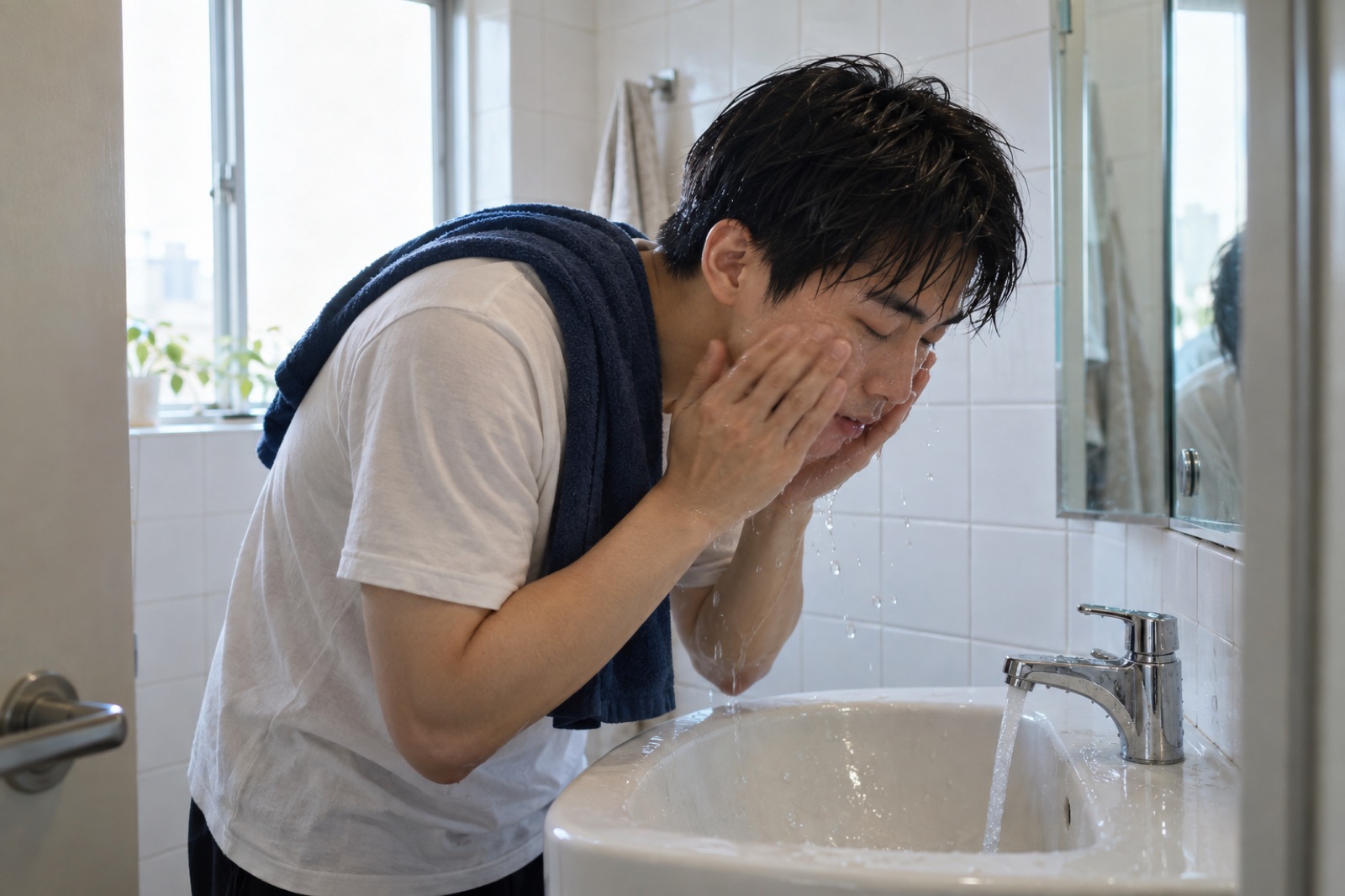
Check tightness right after washing, shine at lunch, and flaking and tightness in the evening. Each time point shows you a different thing, so if you write down just one, it is easy to confuse dehydrated oily skin with plain oily skin.
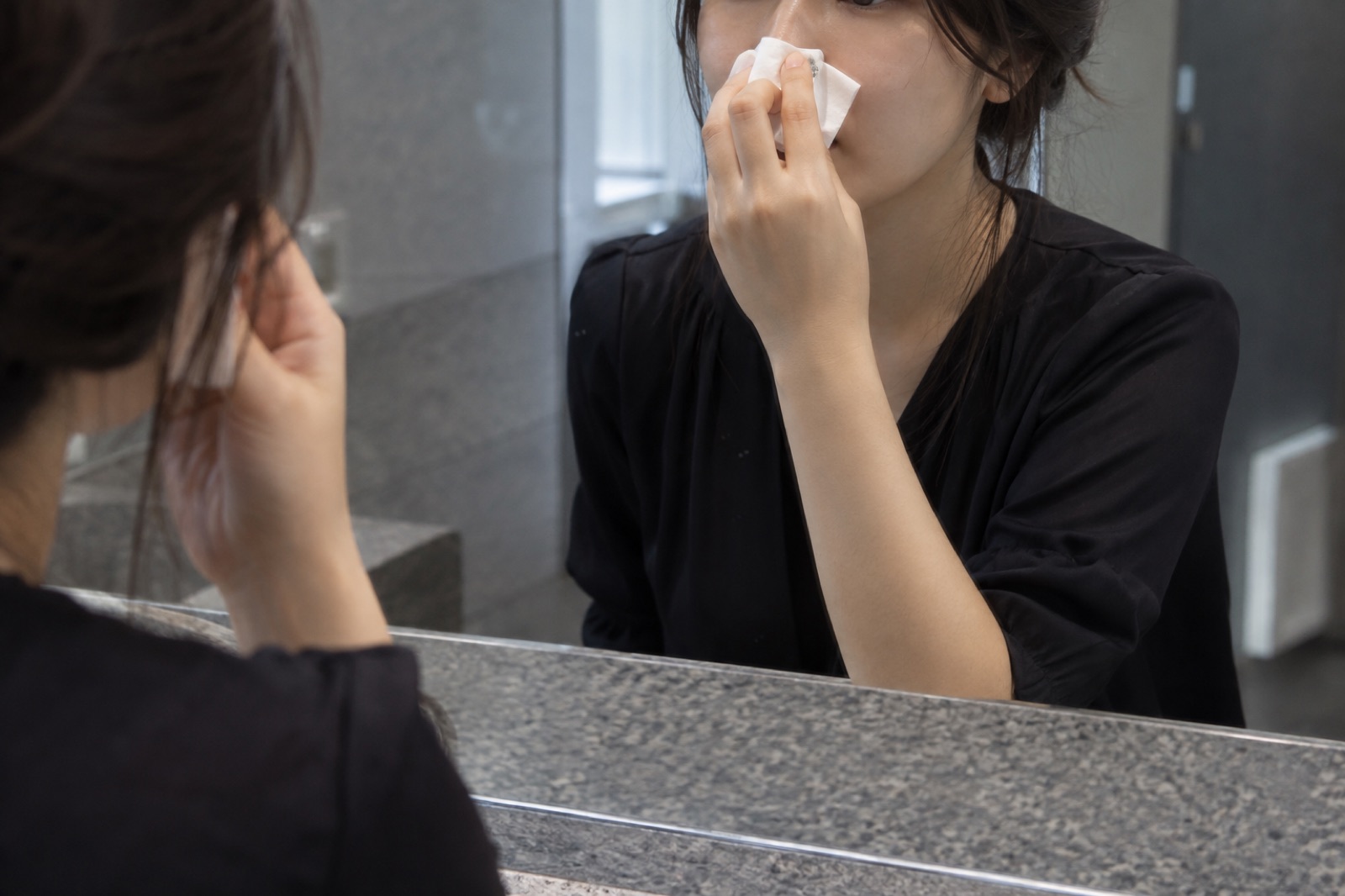
If you are getting ready for work, rate it within 5 minutes after washing, before lotion, and at lunch, rate it in front of a mirror before you eat. Students can use their lunch break, and if you work from home, a noon alarm works. Do the evening check right after you get home and before you take off makeup, so you can see where it is lifting.
Why is my skin still dry after applying lotion?
How long the product holds water and the way you wash both play a part. In a 2020 randomized trial, two lamellar moisturizers showed a hydration difference for up to 24 hours after one application, while the comparison product made a difference only at the 30-minute and 2-hour marks.
It was a test on leg skin, so it does not carry straight over to the face, but it means that even products all called “lotion” may last for different lengths of time. The KDCA advises that washing too often or rubbing too hard can damage the barrier, and it does not recommend soap because it is alkaline. If you are washing three times a day because of lunchtime shine, put that habit in your log first.
How many thin layers should you apply?
Match your highest-scoring time of day and apply in thin layers instead of one thick one. The Korean Dermatological Association describes toner as the step that adds water after washing and lotion as a light cream that is 60–80% water, so adjust the number of layers within the toner → lotion order.
If tightness right after washing scores high, apply two thin layers of toner; if lunchtime shine scores high, skip lotion on your T-zone and use it only on your cheeks. If evening tightness scores high, add one more layer of lotion after your evening wash. Change only one box at a time and log for another 5 days, so you can tell which change made the difference.

What should I do about closed comedones on dehydrated oily skin?
Before you stop moisturizing, look at product labels and how often you use exfoliating products. The KDCA advises using products labeled non-comedogenic or non-acnegenic and a low-oil moisturizer made for acne-prone skin, and avoiding scrubs because they can weaken the barrier.
The Korean Dermatological Association explains that closed comedones, the small white bumps known in Korea as “jopssal,” matter because they are the stage before inflammation sets in, and it notes that overusing exfoliating products can irritate skin and make acne worse. If you piled on several products at once to fix the tight feeling, take out the one you added last, and count the bumps on your forehead, cheeks, and chin once a week for 4 weeks.
Three-times-a-day log and amount adjustment table
| Day | Cheek tightness right after washing (0–3) | T-zone shine at lunch (0–3) | Evening tightness and flaking (0–3) | Times washed today | Notes (heating, face mask, workout) |
|---|---|---|---|---|---|
| Day 1 | |||||
| Day 2 | |||||
| Day 3 | |||||
| Day 4 | |||||
| Day 5 |
| 5-day result | Adjust like this |
|---|---|
| Post-wash tightness 2 or higher on more than 3 days | Two thin layers of toner |
| Lunchtime shine 2 or higher on more than 3 days | Skip lotion on the T-zone, lotion on cheeks only |
| Both (leaning dehydrated oily) | Toner twice + lotion on cheeks, toner only on the T-zone |
| Evening tightness or flaking 2 or higher | Add one layer of lotion after your evening wash |
| Everything 1 or lower | Keep your current routine |
When is it time for a dermatologist?
- If flaking, itching, or redness lasts more than 2 weeks even after you moisturize more often, see a dermatologist.
- If the small bumps turn red and swollen or start to fill with pus, have a dermatologist check your skin.
- If tightness got worse while you are using acne medication, talk first with the clinic that prescribed it.
Key studies behind this guide
- A 2023 randomized trial of 90 adults with oily skin who used a moisturizing cream for 4 weeks (PMID 37194909) measured oil, skin hydration, and water loss as separate readings.
- In a 2020 randomized trial of 30 adults with dry, sensitive skin (PMID 32167240), two moisturizers showed a hydration difference for up to 24 hours after one application, while the comparison product only did so up to 2 hours.
Frequently asked questions
How can you tell if your skin is dehydrated or oily?
At home, the most practical way is to write down how your skin feels at separate times of day. Even in research, oil, skin hydration, and water loss are each measured with different devices. If on more than three of five days both your tightness right after washing and your shine at lunch score high, count it as dehydration and oiliness overlapping and set your care amounts from there.
Why is my skin still dry after applying lotion?
You need to look at both the product you apply and how you wash. In a 2020 trial, some moisturizers held hydration for up to 24 hours after a single application, while the comparison product made a difference only up to 2 hours. Korea's national health agency (KDCA) warns that washing too often or too hard can damage the skin barrier, so start by writing down how often and how you wash.
What should I do about closed comedones on dehydrated oily skin?
Before cutting back on moisturizer, check product labels and how often you use exfoliating products. The KDCA advises using products labeled non-comedogenic or non-acnegenic and a moisturizer made for acne-prone skin, and avoiding scrubs; the Korean Dermatological Association explains that overusing exfoliating products can irritate skin and make acne worse. Add new products one at a time, and count your bumps for 4 weeks.
Sources
- Moisturizing cream in 90 adults with oily skin: 4-week randomized trial measuring sebum, hydration, and water loss, 2023 (PMID 37194909)A
- Hydration over 24 hours after a single application of lamellar moisturizers, 30 participants, 2020 (PMID 32167240)A
- Korean Dermatological Association — Basic skincare products (Korean)Institutional
- Korean Dermatological Association — Acne vulgaris (Korean)Institutional
- Korea Disease Control and Prevention Agency (KDCA), National Health Information Portal — Acne (Korean)Institutional
Videos and forum posts never count as evidence for a fact here. Full rules: Editorial policy
What to check when choosing a product for this routine
Check the criteria below before the product name. Each item can be found on the full ingredient list or in the product description.
| Item | What to look for | Why |
|---|---|---|
| Where humectants sit | Whether water-binding ingredients such as glycerin appear near the top of the ingredient list | When you apply several thin layers, it gives you a fact to compare how each layer feels |
| How you dispense it | Volume (mL) and the type of bottle opening or pump | It makes it easier to take the same amount each time to match your three-times-a-day log |
| Exfoliating ingredients | Whether exfoliating ingredients such as salicylic acid or AHAs are listed | If you use a separate product for bumps, you can count how many exfoliating ingredients overlap in your routine |
| Irritation testing | Whether the brand says how irritation was tested | Results vary from person to person, but it gives you a basis for comparing irritation in a product that touches your skin several times a day |
Product from this site's operator · KW Cosmetic Content Team
Revive Therapy N.F TonerCosmetics do not replace the diagnosis or treatment of a skin condition.