Oily Skin Routine by Time of Day: Morning, Midday and Night
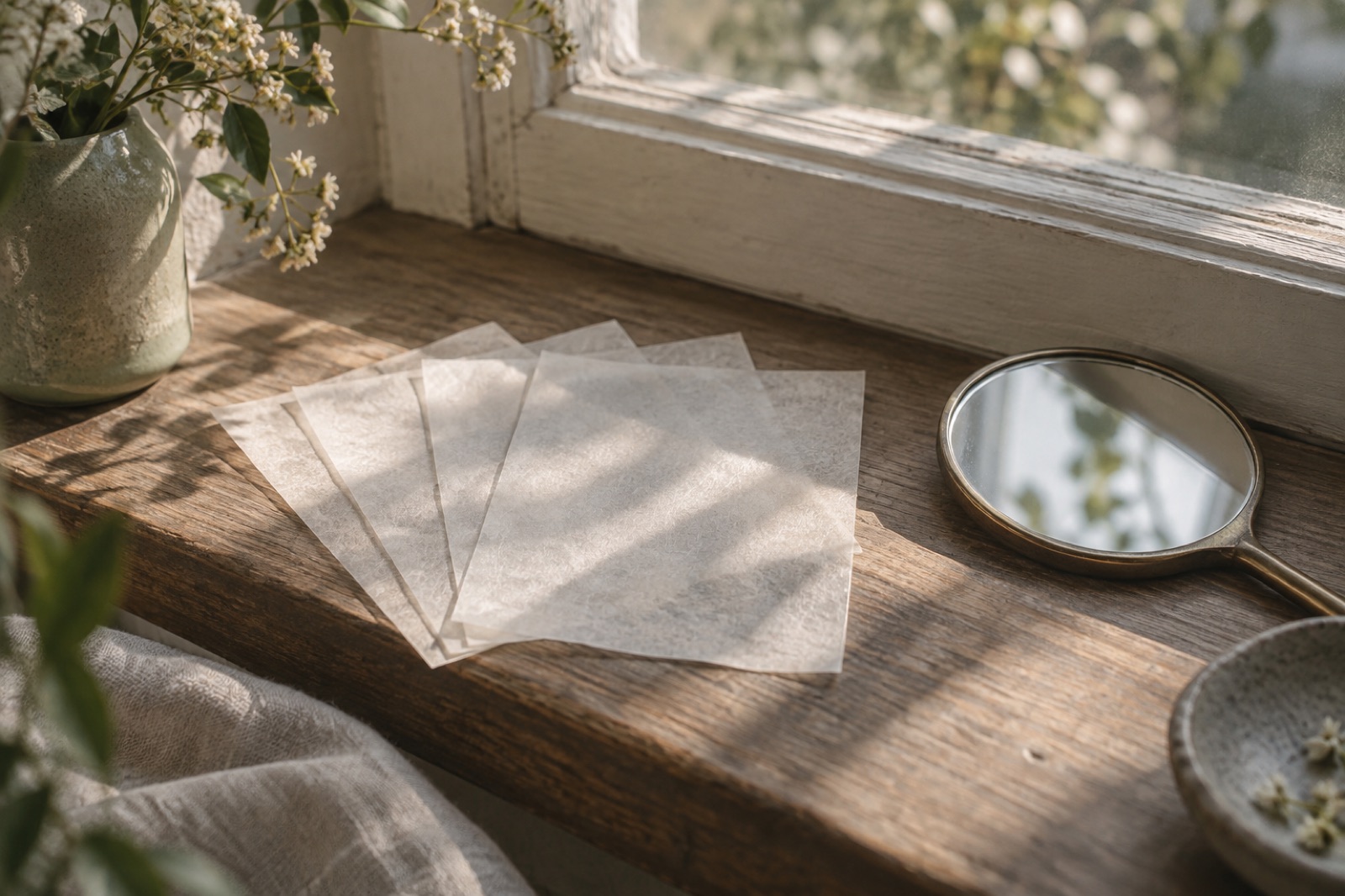
Even on very oily days, keep face washing to twice a day, morning and night, and during the day just press gently with blotting paper once or twice.
What this note covers8 sections
- Why does your face get oilier on hot days?
- What should you do in the morning, midday and evening, and how often?
- Oily in summer, dry in winter: should you switch between oily-skin and dry-skin products?
- Why does oily skin still feel tight underneath?
- Are there foods that lower face oil?
- Your daily table by time slot
- When should you ask a dermatologist about oily skin?
- What this article is based on
| Item | Detail | Basis |
|---|---|---|
| Face washes per day | Twice, morning and night, gently with lukewarm water | KDCA (Korea) · Institution |
| Blotting paper | Press lightly once or twice a day | KDCA (Korea) · Institution |
| Temperature and oil | Oil output rises 10% for every 1°C rise in body temperature, so there is more in summer | KDCA (Korea) · Institution |
| Measured across seasons | Measuring 17 teens every month for a year, both groups tended to make less oil and show weaker barrier function in winter | 2015 PMID 26091385 · B |
| Why it differs by person | Oil amount is tied to the number of active oil glands or output per follicle, so the baseline differs from person to person | 1991 PMID 1835938 · B |
Why does your face get oilier on hot days?
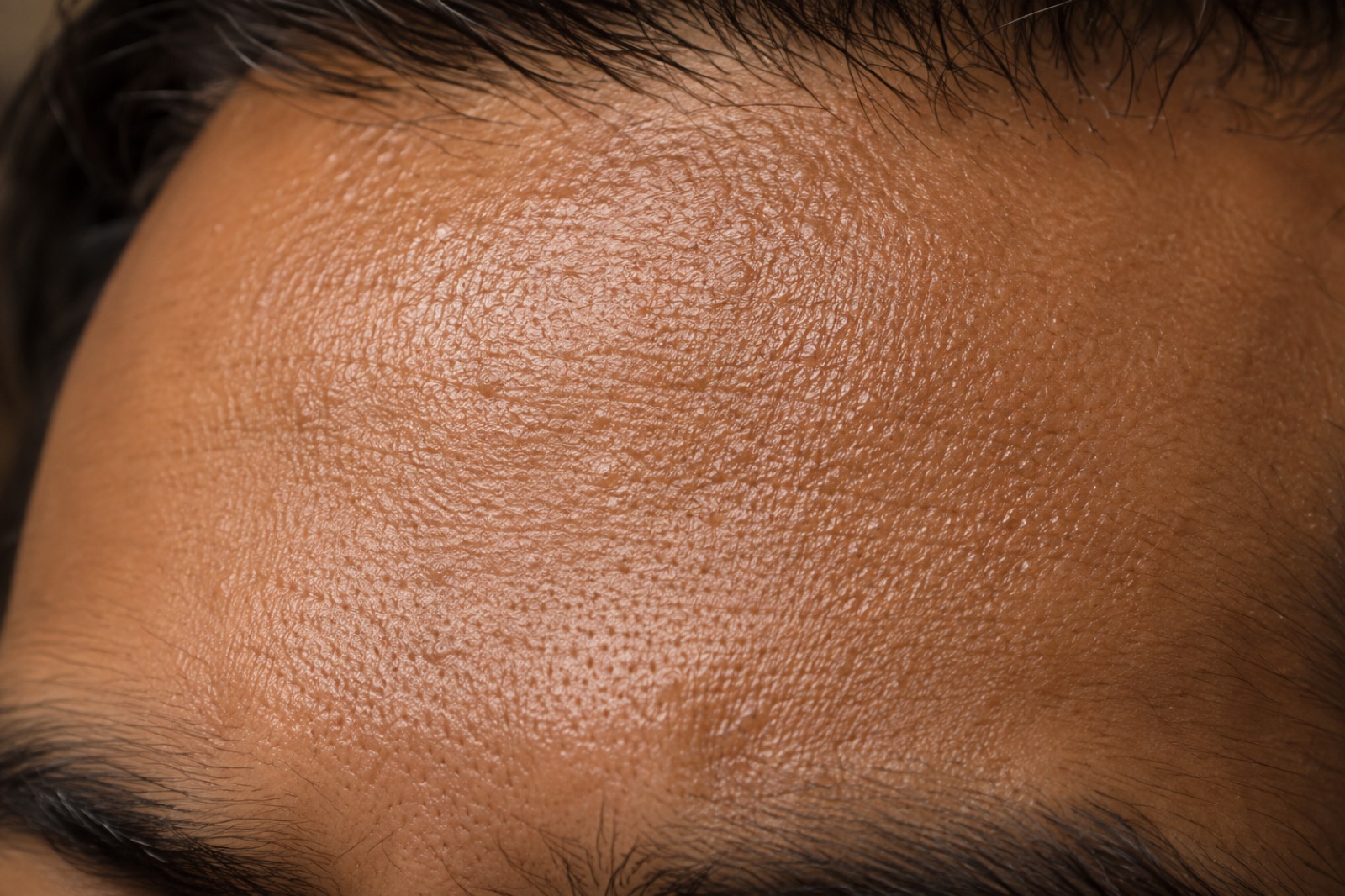
Because oil output rises with temperature. The Korea Disease Control and Prevention Agency (KDCA) explains that oil output goes up 10% for every 1°C rise in body temperature, so you look shinier in summer, while in winter both oil and sweat drop.
So even for the same person, the to-do list differs between a midsummer commute and a heated office in midwinter. In summer there is more daytime shine to deal with, and the same guide notes that in winter the outer skin layer thickens, which makes pores clog more easily. That is why you revisit your time-of-day table once each season.
What should you do in the morning, midday and evening, and how often?
Keep face washing fixed at two, morning and night, and in between, only blot. Even on very shiny days, blotting once or twice is closer to the KDCA guidance than washing again at lunch.
In the morning, wash gently with lukewarm water and a mildly acidic cleanser and rinse well. The Korean Dermatological Association says to wash oily skin without stripping the skin’s surface lipids and to rinse thoroughly. If your forehead and nose get shiny around lunch, press with blotting paper without rubbing. In the evening, remove makeup and sunscreen as soon as you get home, and after washing add one more layer of moisturizer only where it feels tight.
There are also sweaty moments, like after gym class for students or after a field visit for office workers. Even then, rinsing lightly with water or patting dry, instead of washing your whole face again with soap, keeps you within your daily wash count.
Oily in summer, dry in winter: should you switch between oily-skin and dry-skin products?
You can, but it is safer to change one step at a time, a few weeks apart. The Korean Dermatological Association explains that skin type, based on oil and moisture, can change with age and environment.
In a 2015 study that measured 7 teens with acne and 10 without every month for a year, the acne group had more oil in every season, and both groups made less oil in winter. Even if you split summer and winter products, change the moisturizer first and keep the cleanser and toner the same while you watch, so you can tell which change worked. A 2023 trial that gave a moisturizing cream to 90 people with oily skin also measured oil over 4 weeks; this article uses it only as a time frame, “watch 4 weeks under the same conditions,” not for any ingredient effect.
Why does oily skin still feel tight underneath?
Wiping off oil often or over-washing easily leaves skin shiny on the surface but short on water. The KDCA advises that blotting away too much oil can raise water loss and may even lead to more oil.
In the one-year study above, the acne group also had higher water loss through the skin in every season. If your face gets shiny in the afternoon while your cheeks feel tight, count your face washes and blotting sheets first; if both go past the guideline, cutting back is the first adjustment. In Korea, this oily-outside, tight-inside skin is often called “subuji.”
Are there foods that lower face oil?
The evidence behind this article has no food proven to lower oil output when you eat it. The American Academy of Dermatology (AAD) describes the hypothesis that sharp blood sugar spikes may increase oil output, along with studies on low-glycemic-load diets and acne.
In a Korean study that split 32 acne patients aged 20 to 27 between their normal diet and a low-glycemic-load diet for 10 weeks, the low-glycemic-load group had less acne than the normal-diet group, but the AAD notes that some studies found no link. If you want to try a diet change, change one thing at a time and log it on the same dates as the “shine” box in the table below so you can compare.
Your daily table by time slot
| Time slot | What to do | Upper limit | Change in summer | Change in winter |
|---|---|---|---|---|
| Morning | Lukewarm wash, rinse well, light moisturizer | 1 wash | Use a thinner moisturizer | Add one more layer of moisturizer |
| Midday and afternoon | Press blotting paper on forehead and nose | 1–2 times | After sweating, rinse with water only | You can skip blotting |
| Right after you get home | Remove makeup and sunscreen | Once | Right away if you sweated a lot | Same |
| Evening | After washing, add moisturizer only where it feels tight | 1 wash | Keep it thin on the shiny T-zone | One more layer on cheeks and around the mouth |
| Once a week | Rate shine and tightness from 1 to 3 | 1 entry | Note the temperature too | Note heating hours too |
How to read it: over a month of notes, if high shine scores line up with hot days, look at seasonal adjustments first; if they line up with days of many washes or blotting sheets, look at how often you do them first.
When should you ask a dermatologist about oily skin?
- If red, painful breakouts keep increasing along with the shine, see a dermatologist. The Korean Dermatological Association advises getting care if acne comes with oily skin.
- If red flaking and itching show up beside the nose, between the eyebrows and on the scalp, it may be a different skin condition, so have a dermatologist check it.
- If shine suddenly increases along with irregular periods or more facial hair, consider seeing a doctor.
What this article is based on
- According to the KDCA National Health Information Portal acne guide, oil output rises 10% for every 1°C rise in body temperature, and blotting paper is best used lightly once or twice a day.
- In a study that measured 7 teens with acne and 10 without every month for a year (2015, PMID 26091385), the acne group had higher oil and higher water loss through the skin in every season, and both groups made less oil in winter.
- In a Korean study described by the AAD, when 32 acne patients aged 20 to 27 were split into two diet groups, the group that ate a low-glycemic-load diet for 10 weeks had less acne than the normal-diet group. Some studies disagree.
Frequently asked questions
My skin is oily in summer and dry in winter. Should I switch between oily-skin and dry-skin products each season?
The Korean Dermatological Association explains that skin type can change with age and environment, so adjusting textures with the seasons is natural. Rather than switching everything at once, though, change one moisturizer first and watch for about 4 weeks under the same conditions so you can tell which change worked.
Are there foods that cut down on face oil?
The evidence behind this article has no food proven to lower oil output when you eat it. The American Academy of Dermatology (AAD) describes research that foods raising blood sugar quickly can worsen acne, and a Korean study in which 32 acne patients aged 20 to 27 were split between their normal diet and a low-glycemic-load diet for 10 weeks, with less acne in the low-glycemic-load group than in the normal-diet group, but notes that other studies found the opposite.
Why is my skin oily but dehydrated?
Korea's KDCA explains that wiping off oil often or over-washing can increase water loss. In a study that measured teens with acne every month for a year, the group with more oil also had higher water loss through the skin in every season, and in winter both groups tended to show weaker barrier function.
Sources
- Korea Disease Control and Prevention Agency (KDCA) National Health Information Portal — Acne (Korean)Institutional
- Korean Dermatological Association — Skin care (Korean)Institutional
- AAD — Acne and dietInstitutional
- Seasonal changes in facial skin with and without acne (17 teens, 1 year), 2015 (PMID 26091385)B
- Sebum secretion patterns in young women with and without acne, 1991 (PMID 1835938)B
- 4-week randomized trial of a moisturizing cream in 90 people with oily skin, 2023 (PMID 37194909)A
Videos and forum posts never count as evidence for a fact here. Full rules: Editorial policy
What to check when choosing a product for this routine
Check the criteria below before the product name. Each item can be found on the full ingredient list or in the product description.
| Item | What to look for | Why |
|---|---|---|
| pH on the label | Whether a mildly acidic pH number is printed on the bottle or in the product details | It goes on right after a mildly acidic cleanser, so matching the acidity makes your morning and evening notes easier to compare |
| Texture | Whether it is thin like water, and whether oils sit near the top of the full ingredient list | When you log daytime shine, it keeps the oil in what you applied from muddying the picture |
| Pore-clogging testing | Whether the brand says how pore-clogging potential was tested | It gives you one point for comparing the clogged-pore side on skin that makes a lot of oil |
| Irritation testing | Whether the brand says how irritation was tested | Results vary by person, but it gives you a basis for comparing irritation in something you use twice a day |
Product from this site's operator · KW Cosmetic Content Team
Revive Therapy N.F TonerCosmetics do not replace the diagnosis or treatment of a skin condition.